
Office Space Planning and Design: What’s the Difference
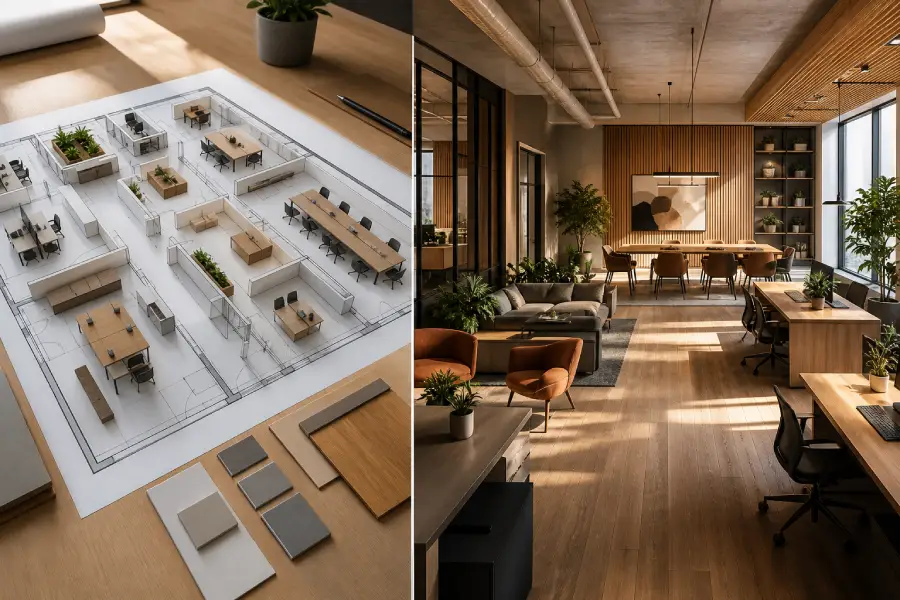
When we talk about office space planning and design, the difference is very simple:
Space planning is the functional arrangement of furniture and work areas to maximize efficiency, flow, and use of space.
Design focuses on the overall look and feel—style, materials, colors, lighting, and aesthetics of the environment.
In office space planning, the focus is on the layout of the space, the placement of furniture, the flow of traffic, workstations, meeting rooms, and storage; that is, everything is arranged so that work can be done smoothly and logically.
In contrast, in design, or office design and space planning, the design department deals with colors, materials, lighting, branding, comfort, and atmosphere to make the space attractive and inspiring.
In a successful office space planning and design project, these two parts must work together because only the right combination of functionality and beauty creates an ideal office and improves the employee experience.
You Might Also Enjoy: What Makes an Office Chair Ergonomic? A Buying Guide
Space Planning vs. Design: The Quick Difference
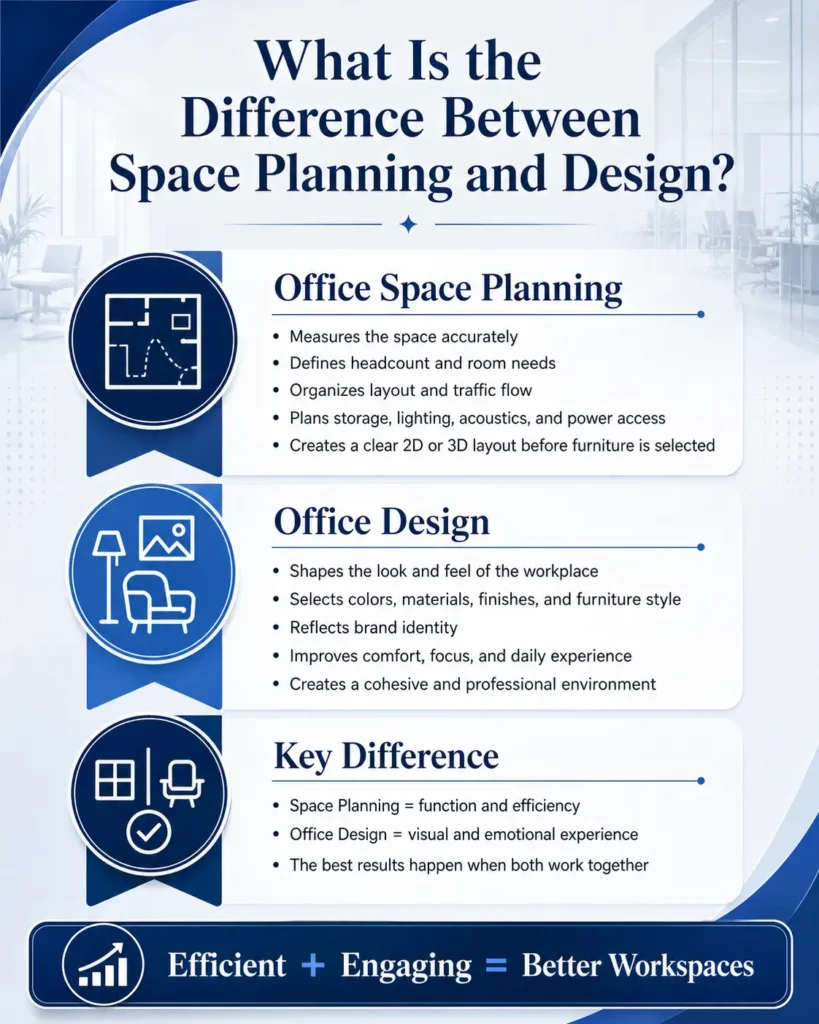
The difference between Space Planning and Design is in their purpose.
Space Planning focuses on functionality.
In contrast, Design is concerned with the look and feel of the environment.
In office design and space planning, Space Planning focuses on structure and functionality, while Design focuses on experience and aesthetics.
| Factor | Space Planning | Design |
| Main focus | Function, layout, flow | Look, feel, brand, comfort |
| Main question | How should the space work? | How should the space feel? |
| Key elements | Desks, walkways, meeting rooms, storage, and team zones | Colors, finishes, lighting, textures, furniture style |
| Best time to start | Before buying furniture or renovating | After the layout and needs are clear |
| Final result | A practical office floor plan | A polished, branded workspace |
In simple terms, space planning creates the structure of the workplace; design brings that workplace to life.
What Is Office Space Planning?
 Office space planning is the process of functionally planning a work environment, meaning that the space is properly analyzed and organized before any design decision is made.
In this step, first an accurate measurement of the space is taken, and then the headcount is checked to determine how many desks, cubicles, private offices, and conference rooms are needed.
After that, the focus is on office layout planning; that is, determining traffic flow, how to access different sections, and avoiding congestion or unused spaces.
Storage placement, natural and artificial lighting, acoustics, power access, and ease of movement for employees in the space are also considered at this stage.
Finally, a detailed 2D or 3D layout plan is prepared to provide a clear picture of how the space will be used.
This section is the foundation of any office space planning design project.
The important thing is that office space planning should be done before purchasing any furniture, such as office desks, office chairs, or conference tables.
Otherwise, the equipment may be beautiful but not aligned with the team’s actual workflow, and reduce the efficiency of the space.
What Is Office Design?
Office design addresses the visual and emotional aspects of the workplace and determines how a workplace should feel and be perceived.
This section includes choosing colors, materials, finishes, lighting, furniture style, wall treatments, and flooring to make the space look coordinated and professional.
It is also very important to pay attention to brand identity, as the design must accurately convey the brand’s identity and message.
Office design is not just decoration.
It shapes how employees, clients, and visitors experience the workspace.
This means that design directly affects employee focus, comfort, and even everyday interactions.
For example, proper lighting can increase productivity, color choices can affect mood, and materials can create a sense of quality or intimacy.
Along with office space planning, design helps ensure that the space is not just functional but also creates a positive and cohesive experience.
Maintaining visual consistency across all components makes the environment look more professional, and employees connect better with the space.
The Key Difference Between Space Planning and Design
 The main difference between office space planning and design is the type of problem each solves.
One focuses on performance and efficiency, and the other on the visual and emotional experience.
Understanding this difference is essential to having a successful workspace.
Space planning solves functional problems
In Space Planning, if the sales team is noisy, it should not be placed next to teams that require focus, such as accounting.
Or if a conference room gets a lot of use, it should be in a more accessible location.
Also, if the commute is difficult or the space seems crowded, the office layout planning should be modified.
The goal is for the space to be fluid, logical, and consistent with the team’s workflow.
You Might Also Enjoy: From Politics to Productivity: Top 7 Office Arguments After Elections
Design solves visual and emotional problems
For example, a law firm needs a formal and reliable space, while a startup needs a dynamic and creative environment with a variety of colors and collaborative spaces.
Here, the choice of color, lighting, materials, and design style directly affects how people feel and experience the space.
They work best together
Ultimately, office design and space planning work best when implemented together; one makes the space efficient, and the other makes it engaging and experiential.
Which Comes First: Space Planning or Design
 The answer is short and clear: Space planning must be done first, and design must be based on it.
Before making any design decisions, you need to know how many people are going to use the space and what type of commercial office furniture you need.
It should also be determined where workstations will be located, where meeting rooms will be located, where storage and filing cabinets will be located, and how traffic flows will be defined.
These are the main foundations of office space planning, and without them, accurate design decisions will not be made.
Once the layout is determined, you can move on to choosing colors, materials, lighting, and furniture style.
At this stage, design gives the space identity and appeal, but based on a proper structure.
Choosing finishes before planning the layout is like choosing paint colors before knowing where the walls, desks, and walkways will be.
If the design is done first, the result may be beautiful but not aligned with the team’s real needs, and the efficiency of the space may be reduced.
Why Office Space Planning and Design Matter for Businesses
For businesses, office space planning and design is not just about the appearance of the office; it directly impacts performance, costs, and growth.
Proper use of square footage ensures that no part of the space is wasted and every meter is used optimally.
This also prevents you from buying the wrong furniture, as everything is chosen based on actual needs and the specific layout.
On the other hand, proper planning and design can increase productivity.
When commute routes are logical, collaboration spaces are properly defined, and privacy is maintained, employees work more comfortably and effectively.
Also, paying attention to comfort, such as appropriate lighting, standard layout, and choosing the right materials, improves the daily experience of employees.
A strong office space planning and design process helps businesses create a workspace that is functional, comfortable, scalable, and aligned with their brand.
This means the space is ready not only for today, but also for future growth or even downsizing.
Ultimately, a well-designed office has a huge impact on client impression and can present a more professional image of your brand.
You Might Also Enjoy: 16 Tips for Furnishing Your Office Space Without Wasting Time
The Office Space Planning Design Process: Step by Step
A successful office space planning design process helps you have an accurate picture of your future workspace before any expenses are incurred.
This step-by-step process ensures that both performance and design go smoothly.
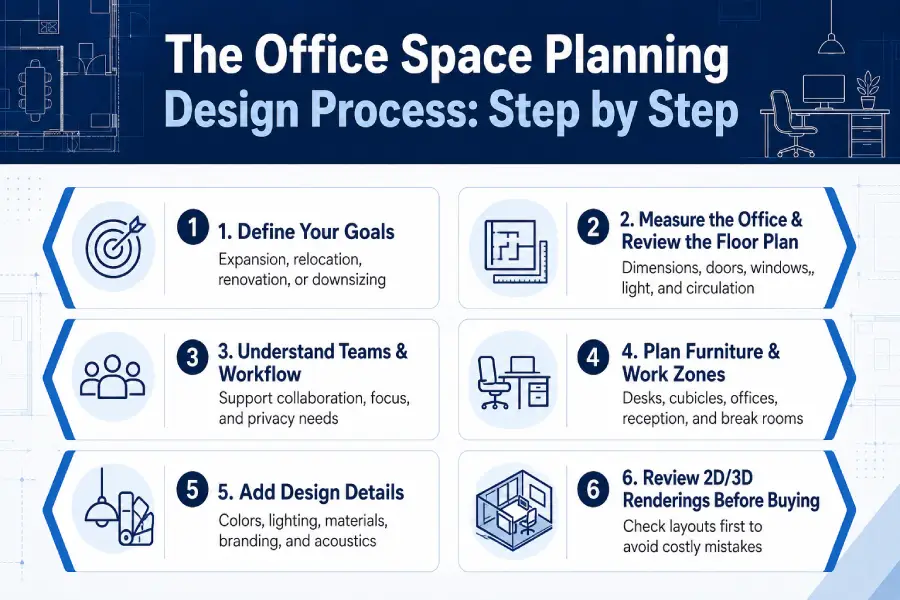
1. Define your goals
First, you need to define your goal.
Is the company expanding? Relocating?
Or is it considering renovation or even downsizing?
The answers to these questions will determine the direction of the entire project.
2. Measure the office and review the floor plan
At this stage, precise measurements of the space are taken.
Dimensions, location of doors and windows, columns, access to electricity, natural light, and circulation routes are reviewed to create a precise foundation for planning.
3. Understand teams and workflow
Understanding teams and workflow is very important.
It should be clear which people need to be close together and which teams need more privacy.
This helps optimize collaboration and focus.
4. Plan furniture and work zones
At this stage, the layout of the space is formed with the office space configuration tool.
The location of desks, office cubicles, office benching, private offices, conference tables, reception, and break rooms is determined so that each section has a specific place.
5. Add design details
After the layout is finalized, it’s time for design.
The selection of colors, lighting, materials, branding, finishes, and acoustic elements is done so that the space is not only functional but also attractive.
6. Review 2D/3D renderings before buying
Before purchasing any type of furniture, you should check out 2D or 3D renderings.
This will help avoid making the wrong choices and ensure that everything is exactly aligned with your needs.
Common Office Planning and Design Mistakes to Avoid
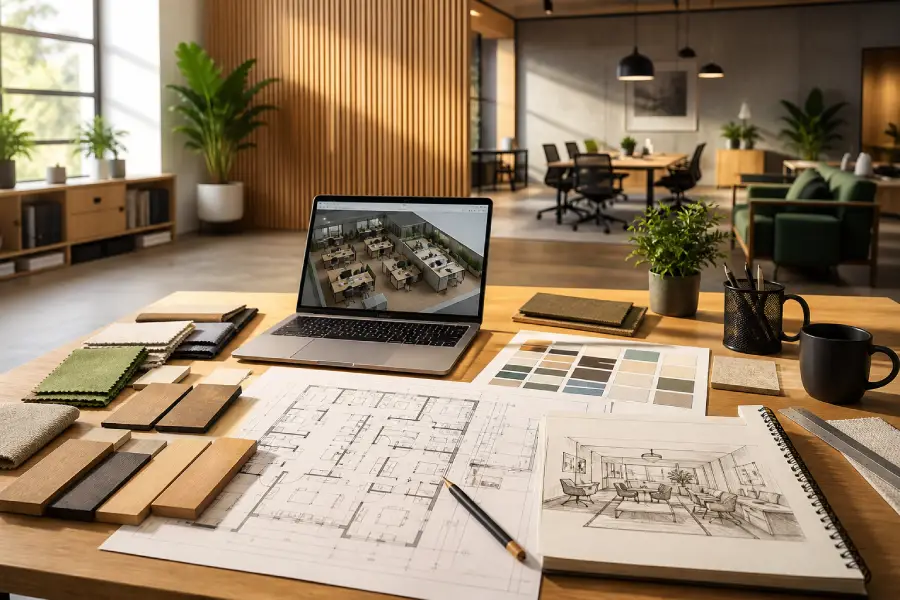 In any office planning and design project, mistakes can reduce efficiency, increase costs, and lower employee satisfaction.
Some of the most serious mistakes include:
- Buying furniture before accurately measuring the space
- Focusing only on appearance
- Ignoring traffic flow and routes
- Forgetting access to power and data
- Failing to plan for storage
- Creating too much open space without maintaining privacy
- Ignoring acoustics and sound control
- Failing to consider future growth
- Ignoring a professional layout review before implementation
In fact, success in office planning and design comes from balancing beauty and functionality.
Even small mistakes in layout or furniture selection can reduce employee productivity and comfort.
You Might Also Enjoy: What Is A Cubicle: Definition, Types, and Benefits In 2026
Space Planning and Design for Houston Offices
For Houston businesses, office space planning and design is a practical and strategic decision, not just about aesthetics.
The goal is to maximize rented space while supporting growth, hybrid work, client meetings, and daily productivity.
Companies in Houston often deal with rapid growth, team changes, and the need for flexibility.
That’s why every square meter should serve a clear purpose.
Here, office space planning in Houston is essential for organizing the layout efficiently—from workstations to meeting rooms and collaboration areas.
At the same time, Houston office furniture should be chosen based on real workflow needs, not just appearance.
In addition, office design services in Houston help ensure the space is both functional and visually aligned with the brand.
Ultimately, a strong office space planning and design approach creates a workspace that is flexible, efficient, and ready for future growth.
When Should You Hire a Professional for Office Space Planning & Design?
If you are involved in office space planning & design, some circumstances indicate it is best to seek help from a professional.
This can prevent costly mistakes and make the result more professional.
In these cases, it is better to consult a specialist:
- moving to a new office
- expanding team
- opening a new branch
- buying new office furniture
- reconfiguring cubicles or layout
- improving productivity
- Changing from private offices to open or hybrid workspaces
- Need 2D or 3D layout before purchase
Conclusion: You Need Both Planning and Design
Space planning makes the office work properly, and design makes the space look complete and pleasant.
The best offices are not only beautiful, but also functional, comfortable, flexible, and designed to fit the way people actually work.
When office space planning and design are executed together, the result is a workspace that both increases productivity and improves the employee experience.
If you need help with office space planning and design in Houston, our team at Collaborative Office Interiors can help you design a layout, select the right office furniture, and create a workspace that aligns with your team, budget, and brand.

John Ofield is the owner of Collaborative Office Interiors. Houston’s trusted source for modern and commercial office furniture, office cubicles, demountable walls, office desks and tables, and complete workspace solutions. With more than 40 years of experience, he combines deep product knowledge with hands-on space-planning expertise to create ergonomic, productivity-focused work environments for businesses across Southeast Texas.