
16 Tips for Furnishing Your Office Space Without Wasting Time
Office space layout and furnishing is not just about buying desks and chairs; it directly affects your productivity, employee comfort, brand image, commuting habits, level of collaboration, and even your long-term costs.
For this reason, if you manage this section correctly, you can both improve team performance and save costs.
A properly designed office space helps employees work more comfortably, stay more focused, and be less tired.
At the same time, a proper layout makes communication and collaboration between team members easier and more effective.
On the other hand, the appearance of your office is the first thing clients and colleagues see.
A professional and organized space can build trust and make your brand appear stronger.
Also, properly designing transportation routes and access to equipment makes things go faster and smoother.
Ultimately, making the right choices in office furnishing is an investment that will pay off over time.
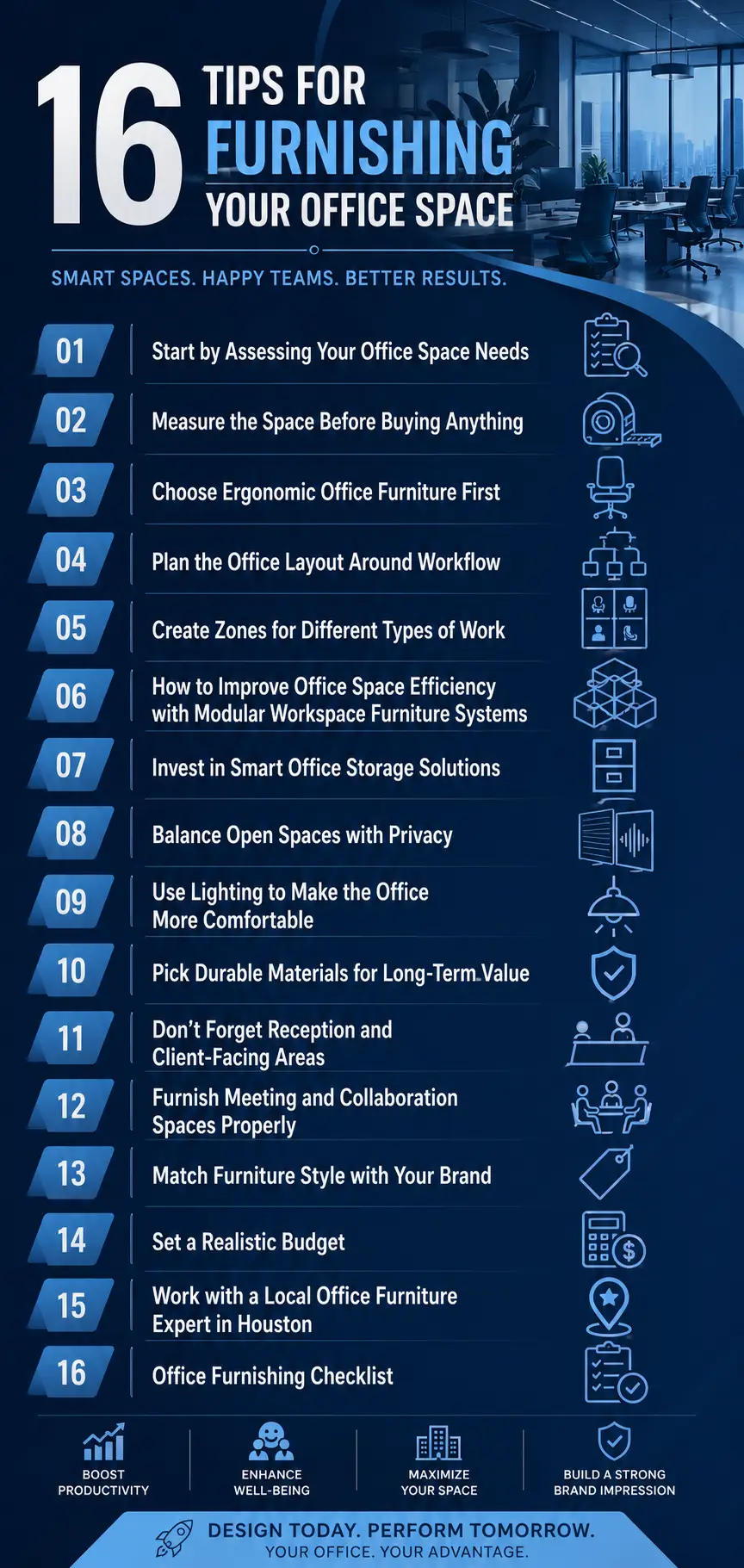
16 Tips for Furnishing Your Office Space
1. Start by Assessing Your Office Space Needs
To understand how to furnish an office properly, you must first determine the real needs of your workspace.
If you don’t take this step seriously, you can easily end up with extra costs or a lack of space.
Determine the number of employees and be sure to consider future growth.
Next, consider the type of work; if the tasks require focus, private spaces are more important, and if you work in a team, open, interactive spaces work better.
You should also determine what areas you need, such as meeting rooms, reception areas, break areas, private workspaces, and storage space.
Each of these has an impact on the team’s discipline, comfort, and performance.
Finally, design the movement paths and access points to be simple and efficient so tasks can move faster and the space works more effectively.
You Might Also Enjoy: What Is A Cubicle: Definition, Types, and Benefits In 2026
 2. Measure the Space Before Buying Anything
To properly understand how to furnish an office, you must accurately measure the space before purchasing.
This will prevent common mistakes and additional costs.
Check the dimensions of the room and determine the circulation routes so that the space is not crowded and movement is easy.
Consider the location of outlets, windows, and doors so you don’t have any problems with the layout later.
If there are columns or obstacles in the space, plan for them in advance.
Also, don’t just think about the placement of office desks; you should also ensure there is enough room for drawers to open and for office chairs to move comfortably.
This step is simple, but it has a huge impact on the final result and helps make the office layout fully functional.
An office furniture layout design tool can help you visualize furniture placement, circulation paths, and workspace configurations before making any purchases.
3. Choose Ergonomic Office Furniture First
The first priority in office furnishing should be ergonomics, as it directly affects comfort, health, and productivity.
An ergonomic chair with proper back support and adjustable height is essential to prevent fatigue and pain during long sitting hours.
The desk should be at a suitable height, and height-adjustable desks are a good option for reducing fatigue.
The monitor should be at eye level to avoid neck strain, and the keyboard and mouse should be positioned so the wrists stay in a natural, relaxed position.
Investing in ergonomic furniture from the start helps maintain team health and improves overall work efficiency.
4. Plan the Office Layout Around Workflow
To get office space arranging right, you need to design the layout based on how teams work, not just the shape of the space.
Place teams that collaborate frequently close to each other so communication becomes faster and easier.
Also, keep circulation paths clear so the space doesn’t become crowded or confusing.
Along with collaborative spaces, be sure to include areas for individual work to maintain focus.
Good organization means getting things done more easily and without wasting time.
5. Create Zones for Different Types of Work
To improve office organization and efficiency, divide the space into several specific sections.
This will ensure that each activity has its place and reduce clutter.
Consider one zone for focusing on individual work and another for group work and collaboration.
A meeting room is essential for formal meetings.
Also, set aside a separate space for phone or video calls so that you don’t disturb others.
Reception, break areas, and storage areas also help to make the environment more professional and organized.
 6. How to Improve Office Space Efficiency with Modular Workspace Furniture Systems
To increase space efficiency, using how to improve office space efficiency with modular workspace furniture systems is a smart solution.
These systems help you quickly change the space depending on your needs.
Modular furniture allows you to easily move the layout and adjust the space for team growth or a change of use.
Office benching systems are suitable for large teams because they take up less space and make collaboration easier.
Office cubicles are used to create privacy and better focus, especially for individual work.
Movable partitions also allow you to divide or open up space without construction.
Overall, these types of work systems make your office both flexible and make the most of space.
You Might Also Enjoy: How AI is Influencing Furniture Design in 2026
7. Invest in Smart Office Storage Solutions
Using the right office storage solutions will keep your work environment tidy and increase productivity.
When items have a specific place, both the space becomes more private and access is faster.
Filing cabinets are essential for storing important documents and preventing clutter.
Vertical shelves help make better use of wall space and keep floor space free.
Storage walls are very practical for small offices because they both create space and serve as decor.
Pedestals are also placed next to the table and are suitable for everyday and personal items.
In addition, shared storage creates more order for the equipment that the entire team needs and prevents duplication of equipment.
8. Balance Open Spaces with Privacy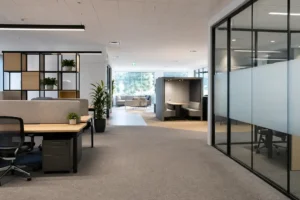
Open space in the office is very useful for collaboration, interaction, and speed of communication.
However, if the office space is completely open, focus and productivity can decrease.
That’s why you need to strike a balance between openness and privacy.
In addition to an open office, it is better to have special focus rooms so that deep work can be done without distractions.
Using acoustic panels also helps reduce noise and keep the environment quieter.
Phone booths are very useful for phone or video calls.
Partitions can also divide space without the need for construction and provide more flexibility to the layout.
9. Use Lighting to Make the Office More Comfortable
Proper lighting plays an important role in employee comfort and productivity.
If the space does not have proper lighting, it will quickly cause eye fatigue and loss of focus.
Use natural light as much as possible, as it is both energizing and creates a better atmosphere in the environment.
In addition, the general lighting should be uniform so that the entire space is well-lit.
For more precise work, using task lighting next to each desk helps you see better and focus more.
You should also avoid glare or reflections on your monitor, as this can cause eye strain.
Overall, proper lighting can both reduce fatigue and significantly increase work performance.
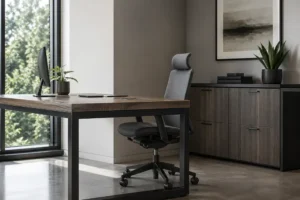 10. Pick Durable Materials for Long-Term Value
In a city like Houston, where humidity and daily use are high, choosing the right materials for an office is very important.
If you focus on quality from the start, repair and replacement costs will be lower in the long run.
Go for contract-grade materials, as they are designed for heavy-duty, continuous use.
These types of materials are more durable and break down more slowly.
Easy cleaning is also an important consideration, especially in workspaces that see a lot of daily use.
Surfaces that are easy to clean both maintain the appearance of the office and improve hygiene.
Finally, don’t just look at the initial price.
Long-term cost of ownership is more important, as a quality choice today can prevent high costs tomorrow.
11. Don’t Forget Reception and Client-Facing Areas
The reception area and customer-facing spaces are the first places that shape your brand image, so they should not be overlooked.
The reception desk should be organized, clear, and professional to create a sense of trust.
Waiting chairs should also be comfortable and clean to create a good experience for the client.
If space allows, using lounge seating can make the environment appear more intimate and professional.
This section is actually the customer’s first impression of your business, so its design has a direct impact on how they view your brand.
12. Furnish Meeting and Collaboration Spaces Properly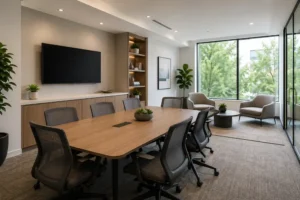
Meeting rooms and collaboration spaces should be designed to facilitate communication and decision-making.
If this section is not properly equipped, meetings become time-consuming and impractical.
A conference table and comfortable chairs are the mainstay of this space.
In addition, having a whiteboard is very important for jotting down ideas and better explaining topics.
Power access should also not be forgotten, as people usually work with laptops and various devices.
If there is a monitor or display in the space, it becomes much easier to present content.
Also, organized cabling and flexible design help keep the space tidy and usable for different needs.
13. Match Furniture Style with Your Brand
The style of Houston office furniture is not just about appearance; it is part of your brand identity.
The colors, materials, and design style should match your business personality to create a cohesive image.
For example, a modern brand will typically use simple design, neutral colors, and minimal materials, while classic spaces can be more formal and warm.
These choices affect the overall feel of the customer and employees.
However, you shouldn’t prioritize appearance over function.
In addition to being in harmony with the brand, furniture should also be comfortable and functional so as not to make daily work difficult.
You Might Also Enjoy: How to Disassemble Office Cubicles in 30 Minutes?
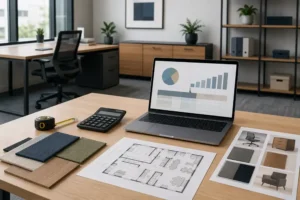 14. Set a Realistic Budget
When furnishing an office, it is essential to have a specific budget so that expenses do not get out of control.
It’s best to divide your budget into three sections: essential, better, and premium.
The essentials section includes basic items such as chairs and desks.
The better part is for increasing the comfort and quality of the space, and the premium part is for details that make the office look more professional.
In the meantime, invest more in ergonomic chairs, multi-use desks, meeting rooms, and reception space, as they will see the most use and impact.
15. Work with a Local Office Furniture Expert in Houston
Working with a local Houston professional will make the office furnishing process go faster and more accurately.
Specialized teams will take care of everything from space measurement and space planning to choosing the best layout for you.
It also helps in selecting furniture suitable for Houston conditions and managing delivery and installation.
This will make optimal use of space and make the end result more professional.
16. Office Furnishing Checklist
To make sure you don’t miss any steps, consider this simple checklist:
First, measure the space accurately. Then, define the work zones.
Then select desks according to your needs and add appropriate lighting.
Next, coordinate the order, delivery, and installation.
Finally, test the entire space to make sure the workflow is working properly.
Conclusion
Furnishing an office is a complete process for creating an efficient and professional environment.
When principles such as accurate space measurement, ergonomic furniture selection, proper layout design, and zoning are followed, the result will be an organized and functional environment.
Using solutions such as office storage solutions, proper lighting, and modular systems helps optimize space and increase productivity.
In addition, paying attention to important details such as meeting rooms, reception space, and material quality will improve the experience of employees and customers.
Ultimately, if you make the right decisions on how to furnish an office and pay attention to things like ergonomic office furniture and arranging office space, you can create an office that is both functionally strong and projects a professional image of your brand.

John Ofield is the owner of Collaborative Office Interiors. Houston’s trusted source for modern and commercial office furniture, office cubicles, demountable walls, office desks and tables, and complete workspace solutions. With more than 40 years of experience, he combines deep product knowledge with hands-on space-planning expertise to create ergonomic, productivity-focused work environments for businesses across Southeast Texas.