
How AI is Influencing Furniture Design in 2026
Artificial intelligence (AI) refers to technology that allows machines to learn patterns, make decisions, and even participate in creative processes.
In 2026, this technology has reached the point where it has become an integral part of the design and manufacturing process.
The commercial office furniture industry is no exception to this transformation and is now at one of its most important points of change.
Now the question is: How is AI influencing furniture design in 2026?
AI is influencing furniture design in 2026 by enabling faster design processes, smarter space planning, and mass customization, while also improving real-time visualization and integrating technology into furniture for more functional, user-specific workspaces.
For furniture designers, artificial intelligence has made it possible to create forms and ideas that were previously either very time-consuming or even unimaginable.
With the help of AI, manufacturers have been able to make manufacturing processes more efficient, faster, and more cost-effective.
On the other hand, today’s customers expect personalized products, tailored to their specific needs and even designed based on their individual tastes, which would have been difficult to achieve without AI.
In this article, we explore the fundamental aspects of the impact of artificial intelligence on furniture design trends for 2026.
You Might Also Enjoy: How to Disassemble Office Cubicles in 30 Minutes?
The AI Revolution in Furniture Design
What is AI-Driven Design?
Artificial intelligence-based design in furniture refers to the use of AI to generate or optimize design ideas.
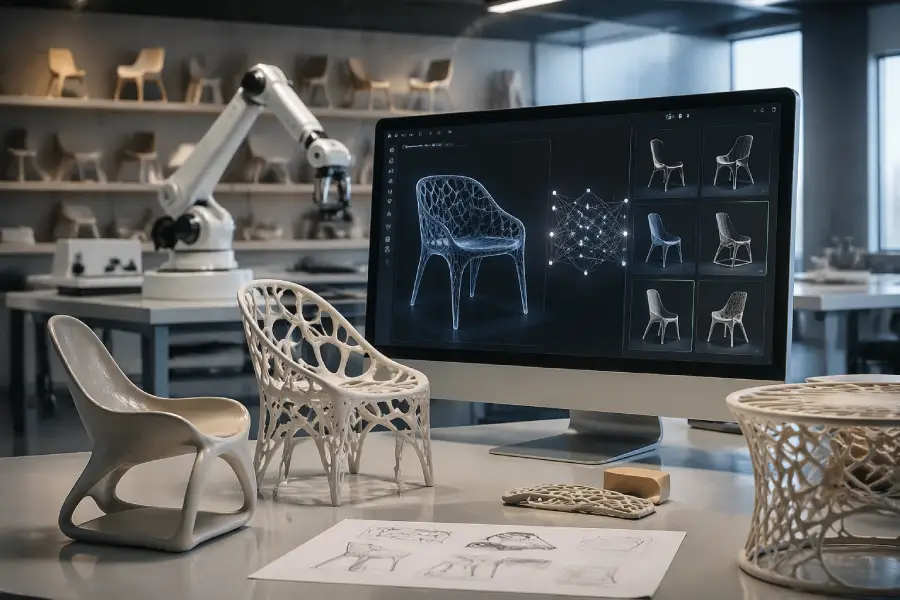
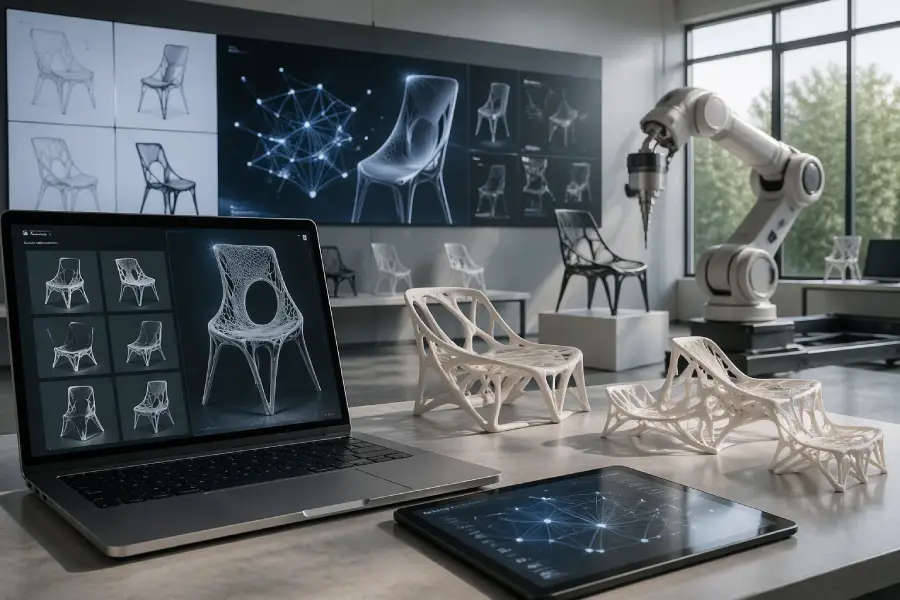
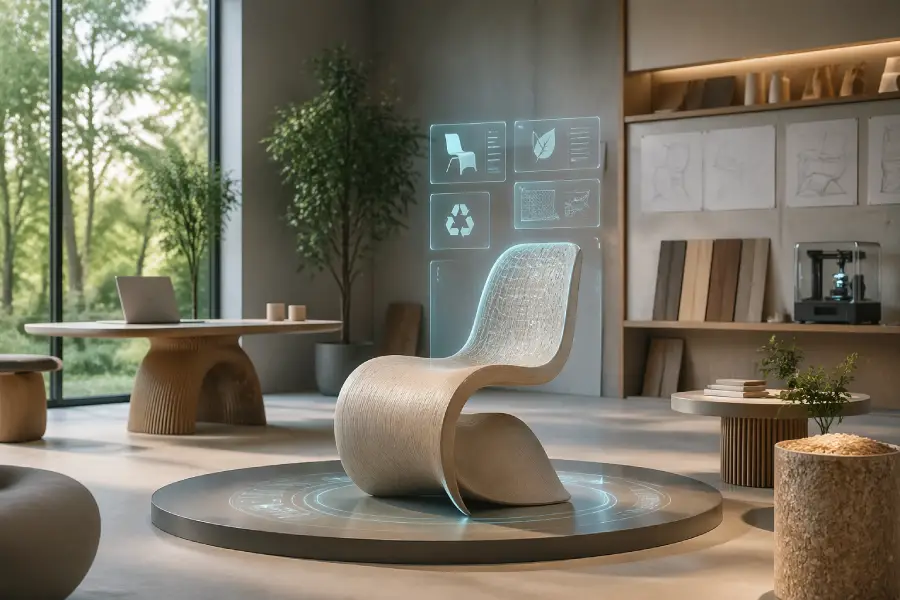
One of the most important concepts in this field is Generative Design, in which artificial intelligence, by examining thousands of options, suggests the best designs based on criteria such as material consumption, ergonomics, and beauty.
The main difference between AI and traditional design tools is that conventional software only helps implement the designer’s ideas, but AI can generate new suggestions on its own.
For this reason, the role of the designer has shifted from creating forms to selecting and guiding intelligent ideas.
AI in furniture design is enabling the creation of innovative shapes and structures that were previously unimaginable.
Why 2026 Matters?
In 2026, dramatic advances in processing technologies and artificial intelligence will fundamentally change office furniture and design.
Most leaders in the real estate and office industry believe that artificial intelligence will significantly redesign office spaces and their layouts within the next 2 to 3 years.
These predictions clearly show that companies are preparing their workplaces to support the technical and collaborative needs that AI brings.
These trends indicate that AI is being seen not only as a digital tool, but also as a key factor in redefining workspaces and furniture design.
These major developments indicate that 2026 will be a major turning point for artificial intelligence in furniture and office space design.
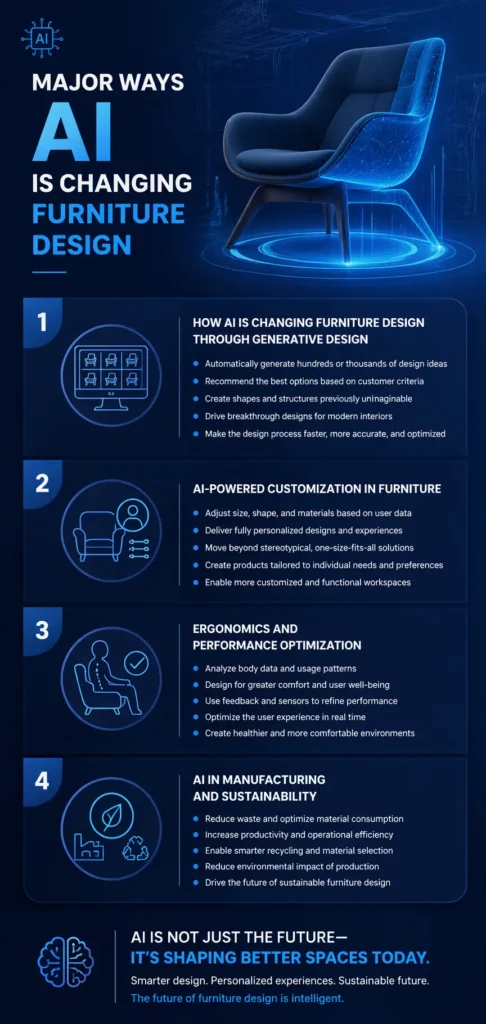
Major Ways AI is Changing Furniture Design
1. How AI is Changing Furniture Design through
Artificial intelligence is fundamentally changing the process of creating form in furniture design.
Through Generative Design, AI systems can automatically generate hundreds or even thousands of design ideas and recommend the best options based on various customer criteria.
This approach has led to the creation of shapes and structures in furniture design that were previously unimaginable.
How AI is influencing furniture design can be seen in the breakthrough designs that now shape modern interiors.
You Might Also Enjoy: How to Assemble Office Cubicles in 30 Minutes?
2. AI-Powered Customization in Furniture
One of the most important changes is the increased level of customization.
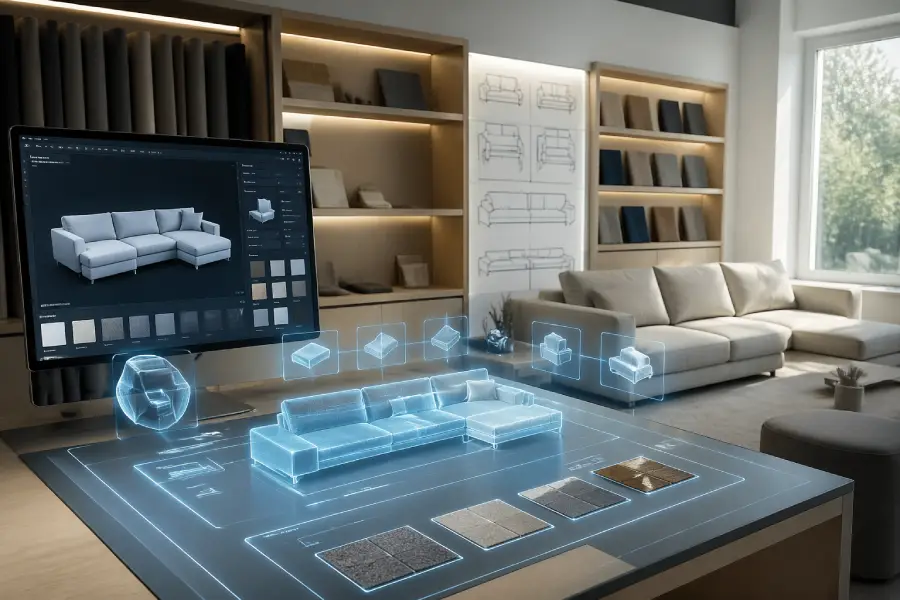
Artificial intelligence makes it possible to adjust the size, shape, and even material of furniture based on user data and preferences.
As a result, customers are no longer faced with stereotypical designs, but receive a fully personalized experience tailored to their individual needs.
This shift in design approach is exactly how AI is changing furniture design, providing users with more customized and functional workspaces.
This process, known as generative design, allows designers to create designs that would previously be very time-consuming to achieve using algorithms and detailed representations.
Here, AI not only helps designers consider user needs but also makes the design process a faster, more accurate, and more optimized experience.
In this way, AI enables other customers to access more customized and functional products designed according to their desires and preferences.
This evolution in design shows us that there is no longer a need to spend long hours on manual design, and with the help of artificial intelligence, we can create furniture that is not only beautiful but also precisely tailored to the individual needs of users.
3. Ergonomics and Performance Optimization
AI plays an important role in improving the ergonomics and functionality of furniture.
By analyzing users’ body data, usage patterns, and even feedback, intelligent systems can provide designs that create greater comfort and health.
In some cases, combining AI with sensors also helps optimize the user experience.
AI in furniture design is now playing a key role in making work environments healthier and more comfortable.
4. AI in Manufacturing and Sustainability
In the manufacturing sector, AI helps reduce waste, optimize material consumption, and increase productivity.
Also in the field of sustainability, AI can make the recycling and material selection process smarter and reduce the environmental impact of furniture production.
This is a key area where furniture design trends 2026 will continue to evolve, as sustainability becomes more integrated into the production processes.
Challenges and Opportunities of AI in Furniture Design
Challenges:
Ethical and Legal Concerns
One of the most important challenges in using artificial intelligence in furniture design is ethical and legal issues.
The question arises: can AI replace human designers, or will it remain just an auxiliary tool?
Also, the issue of intellectual property (copyright) in designs generated by AI is not yet fully clear and transparent.
If a design is generated by artificial intelligence, who owns the copyright to that design?
Should these rights go to the designers who trained the algorithms or to the companies that use the technology?
These issues are still being discussed and examined, and more specific legal solutions need to be found for them.
You Might Also Enjoy: Where to Donate Office Equipment in The USA: Top 10 Options
Implementation Challenges in Industry
Another challenge is related to the implementation and practical use of AI in the furniture industry.
Many companies still lack the infrastructure to fully integrate AI into the design and manufacturing process.
Additionally, initial costs, the need for staff training, and the complexity of the tools can slow down the adoption process.
However, overcoming these challenges is crucial to realizing the full potential of AI in furniture design.
Opportunities:
AI as a Collaborative Tool for Designers
Artificial intelligence acts more as a collaborative tool than as a replacement for designers.
In this model, humans and AI work simultaneously; AI generates diverse ideas and options, and the designer selects, refines, and optimizes them.
This collaboration can lead to more creative and efficient designs, especially in furniture design trends 2026, where collaboration between technology and creativity is essential.
Market Opportunities
From a market perspective, the use of AI has created new opportunities.
The demand for smart and personalized furniture is increasing, and with the help of artificial intelligence, companies can make the production process more efficient and faster.
This not only reduces costs but also increases the competitiveness of brands by showing how AI is influencing furniture design on a large scale.
The Future of AI in Furniture Design
You Might Also Enjoy: What Are the Biggest and Smallest Sizes for Office Cubicles: Standard Cubicle Size
In the near future, especially by 2030 and beyond, artificial intelligence is expected to play a much deeper role in furniture design and production.
AI will no longer be just a design tool, but will become a decision-making and optimization system throughout the entire production cycle, from initial ideation to final manufacturing and even post-use improvement.
One of the major future trends is the emergence of the concept of “smart furniture” or even “self-learning furniture”; furniture that can adjust and optimize its behavior based on how the user uses it.
For example, an office chair or office desk can improve its comfort or ergonomics over time by analyzing usage data.
The concept of “sustainable AI-driven design” will also be taken more seriously.
In this approach, artificial intelligence analyzes materials, product life cycles, and environmental impacts to provide designs that cause the least damage to the environment.
This makes sustainability one of the main principles of future furniture design, and is part of the broader trend of how AI is changing furniture design in 2026.
Conclusion: The Role of AI in the Next Era of Furniture Design
In this article, we saw how artificial intelligence is fundamentally changing the furniture design industry, from generative design and creating innovative forms to advanced customization for users, optimizing ergonomics, and increasing production efficiency and sustainability.
New AI tools, including platforms for office interior design online free, have also made the design process faster, more accurate, and more interactive.
Ultimately, it can be said that AI is no longer a peripheral technology but has become a core part of the furniture design ecosystem.
The future of the industry is moving towards closer collaboration between humans and AI, where human creativity and the analytical power of AI come together.
For designers, paying attention to AI is no longer a choice, but a necessity.
Smart use of this technology can help them generate ideas faster, deliver more optimized designs, and stay in tune with changing market needs.
In fact, designers who can embrace AI as a collaborative tool will play a more prominent role in the future of the industry.
FAQ
1. What is AI in furniture design?
AI in furniture design is the use of artificial intelligence to generate ideas, optimize designs, and personalize furniture based on data like size, style, and user needs.
2. Can AI completely replace human designers?
No. AI can support and speed up the design process, but it cannot replace human creativity, taste, and decision-making. The future is human + AI collaboration.
3. How do AI tools work for furniture design?
AI tools take inputs like dimensions, materials, and style preferences, then generate multiple design options using machine learning and generative design algorithms.

John Ofield is the owner of Collaborative Office Interiors. Houston’s trusted source for modern and commercial office furniture, office cubicles, demountable walls, office desks and tables, and complete workspace solutions. With more than 40 years of experience, he combines deep product knowledge with hands-on space-planning expertise to create ergonomic, productivity-focused work environments for businesses across Southeast Texas.