Pros and Cons of Open Office Plans: 2026 Review
In 2026, many companies are looking for ways to increase productivity, build stronger connections between employees, and reduce executive costs.
One of the most common solutions is to move to open office layouts, spaces with fewer walls and more shared desks that strive to foster collaboration and creativity.
However, along with its benefits, every new work environment also brings challenges, including increased noise, reduced privacy, and the potential for employee distractions.
For this reason, before choosing such a design, businesses need to know exactly what the pros and cons of open office plans are and whether they are suitable for their organization’s needs.
In this article, we will examine these advantages and disadvantages in a clear and practical way to make your decision easier and more accurate.
You Might Also Enjoy: How Much Do Cubicles Cost? 2026 Guide
What Is an Open Office Plan?
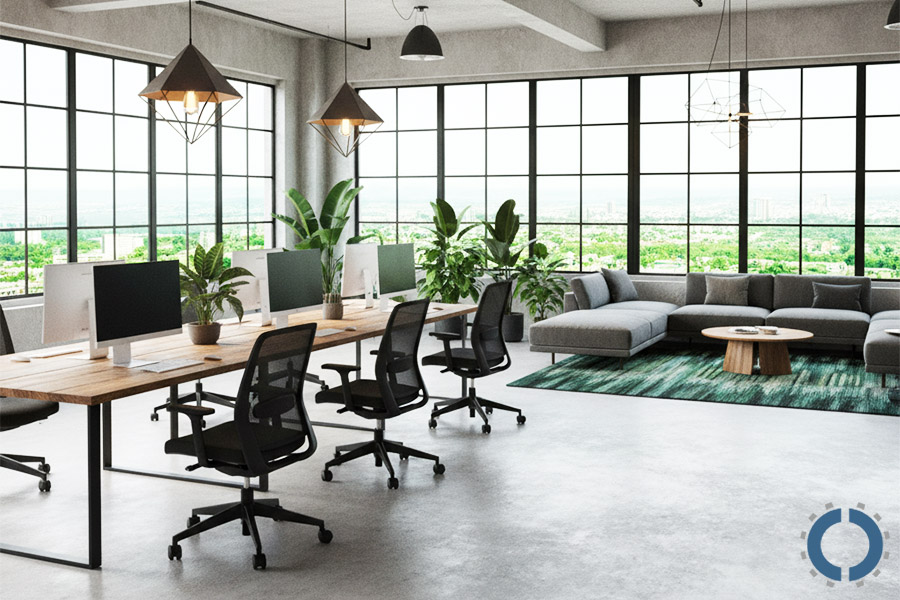
Open-plan offices have become one of the most popular styles of workplace layout in 2026; a spacious, bright space without intrusive walls that puts employees together and makes communication flow faster and more naturally.
In this type of layout, instead of traditional cubicles and partitions, desks are placed in a shared environment and are usually grouped by team or department.
Breakout spaces, collaboration lounges, and even open kitchens are also part of this environment, striving to create a more dynamic and intimate feel.
The idea of the open office plan emerged when many companies realized that overfilling the space with high walls and restrictive layouts not only made it difficult to move around but also caused isolation and reduced collaboration between employees.
For this reason, a new trend emerged that aimed to give the workplace more “breathing space”; that is, to create a space where people could interact more easily, present ideas without hindrance, and draw more energy and motivation from each other.
This style seemed modern and unusual at first, but it soon became a global trend with tables without dividers, comfortable sofas, and small and large social spaces.
In 2026, office designs will be more flexible and more technology-driven than ever before.
These environments allow employees to freely choose how they work and have a better experience of collaboration and communication.
 The Pros of Open Office Plans
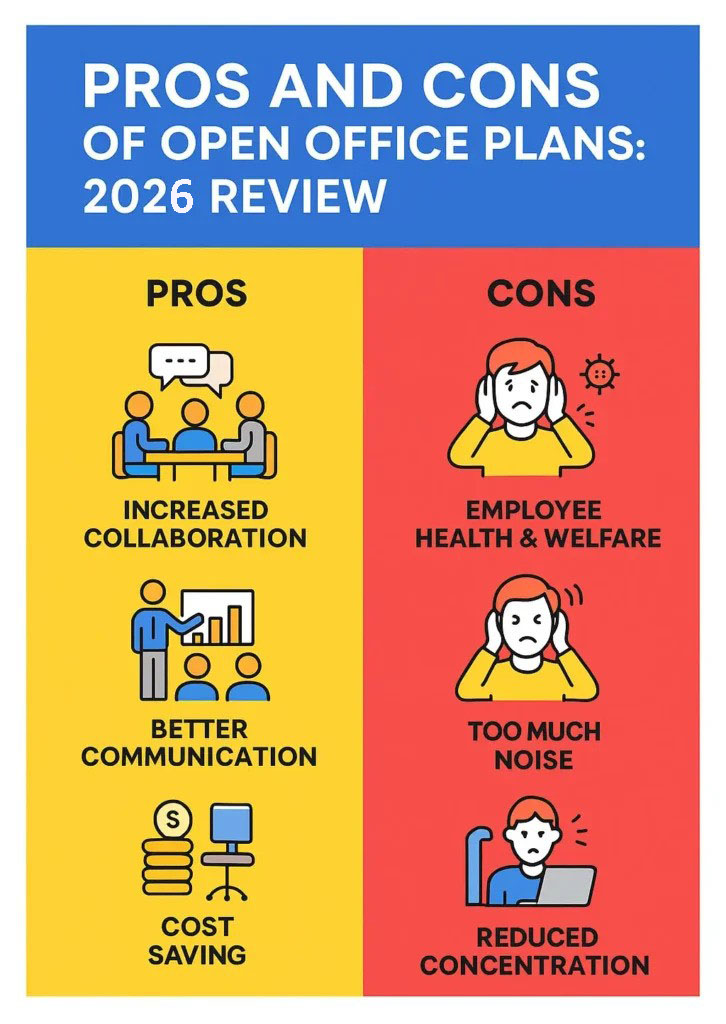
1. Increasing Collaboration and Interaction
One of the biggest benefits of open plan offices is the enhanced collaboration and communication between employees.
When people are confined to cubicles, their motivation and sense of connection with others gradually diminish.
But in open workspaces, conversation and interaction occur more naturally and quickly, and this is the foundation for better creativity and ideation.
The absence of dividing walls makes it easier for employees to reach each other and allows teams to communicate without unnecessary distances.
Research also shows that communication increases by up to 20% in open offices, indicating the important role this layout plays in improving collaboration.
In such an environment, problem-solving occurs faster, and teams can work more harmoniously by focusing on common goals.
2. Better Communication with Managers in Open Office Plans
By creating an environment without strict hierarchies, open-plan offices provide an opportunity for managers and employees to work together in the same space.
This type of arrangement makes employees feel not just “workers,” but rather valuable and contributing members of the company’s success and growth.
When managers are in the same shared space as employees, they are seen as part of the team, not as distant bosses.
This proximity makes teams more solidary and the workplace happier and more harmonious, which ultimately increases productivity and job satisfaction.
You Might Also Enjoy: 12 Easy Exercises You Can Do At Your Office Cubicle
3. Flexible Office Space
One of the main pros of the open office plans is the flexibility in the use of space and furniture arrangement.
Tables and office seating are usually not fixed and can be easily moved, which is essential for growing companies that need to change space quickly.
As the number of employees increases, it becomes easier to relocate desks and reorganize the work environment.
These types of offices also fit in with modern working methods like hot desking, where multiple employees use the same desk at different times, especially when people commute between home and the main office.
In fact, the open office plan becomes a large, reconfigurable space that can be changed to suit team or individual needs at any moment.
Looking to the future, flexible open concept offices, equipped with smart technology and movable commercial office furniture, offer a multi-purpose space that is optimal for both individual work and group activities.
4. Cost Saving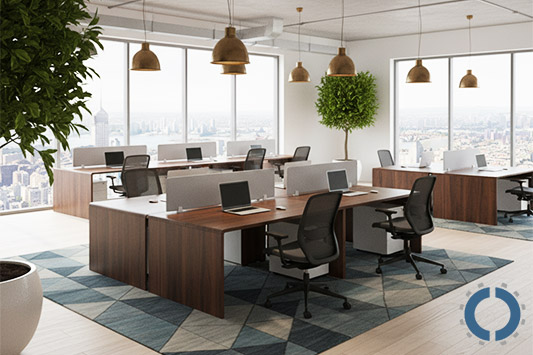
One of the important pros of open office plans is cost reduction.
Installing traditional cubicles and furniture is far more expensive than using modular tables and equipment outdoors.
Additionally, open offices also help foster a sense of collaboration and teamwork among employees.
Using movable and flexible furniture allows companies to customize the space to suit their needs and save on the costs of building and rebuilding walls and dividers.
Overall, equipping a large, shared workspace is more cost-effective than designing and equipping several separate rooms, while providing a dynamic and adaptable environment for teams.
5. Increasing Transparency and Employee Participation
By removing physical barriers, open plan offices create an environment where there is greater transparency among employees, and people feel a greater sense of ownership over the company’s goals and missions.
This sense of belonging can increase employee motivation and participation in organizational projects and programs.
When employees are in a shared space, even if the office desks are separated by glass dividers, greater visibility and transparency are created in daily work.
The Cons of Open Office Plans
No office layout is perfect, and open concept offices also have disadvantages.
The most important challenge of these spaces is the lack of privacy, which can make it difficult for introverts to focus.
The more open the space, the greater the possibility of distraction.
 1. Employee Health and Welfare Issues
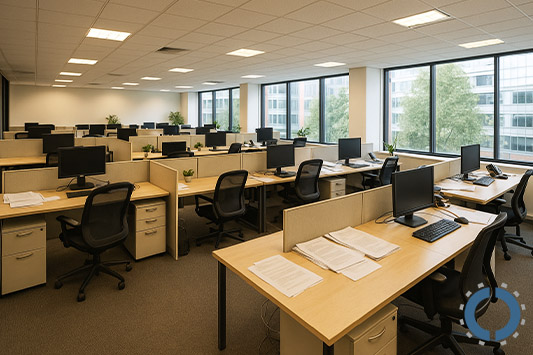
In open-plan offices, viruses and germs spread freely due to the lack of traditional dividers and cubicles for offices.
This became even more important during the COVID-19 pandemic, which forced many companies to work remotely.
However, there are solutions to mitigate this problem.
Installing flexible dividers between desks or using demountable walls can compartmentalize employees while maintaining a sense of collaboration and teamwork.
Additionally, to maintain the mental health and well-being of employees, it is essential to create spaces such as meditation rooms or relaxation pods.
These measures help reduce stress and increase job satisfaction.
You Might Also Enjoy: How to Remove Cubicle Shelves: Your Complete Step-by-Step Guide
2. Too Many Staff and Its Challenges
Studies have shown that when the work environment becomes too crowded, employees feel less satisfied with their jobs, which can lead to a decrease in job motivation.
The solution to this problem is to create alternative spaces for focused work or rest.
Much of today’s work is done on laptops or tablets, so employees can easily pick up their devices and continue working in a quiet, cozy corner or take time to relax.
This flexibility helps reduce stress and improve productivity.
3. Noise and Distraction
One of the biggest problems with open plan offices is the noise and distractions caused by conversations, phone calls, and employee movement.
These factors can disrupt employees’ focus on deep work and important projects.
To reduce this problem, it will be necessary to create quiet spaces and use noise-canceling headphones.
These solutions allow employees to maintain focus and increase workplace productivity.
4. Lack of Privacy
One of the main challenges of open plan offices is the intrusion into employees’ personal space, which can cause physical and psychological concerns.
This problem is significant for people who need a quiet and focused environment to work or who work in sensitive sectors.
An effective solution to mitigate this problem is to use hybrid designs that include private office cubicles and phone pods.
These solutions allow employees to have privacy when needed, without reducing the benefits of outdoor interaction and collaboration.
5. Reduced Concentration for Complex Tasks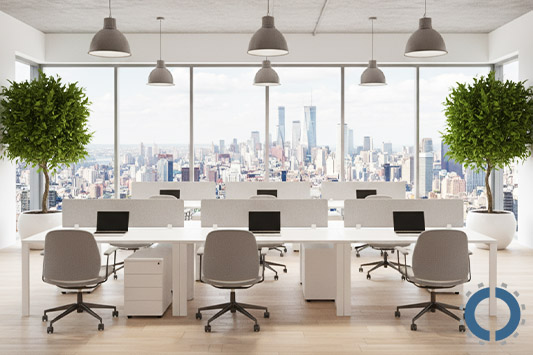
Some tasks that require deep concentration and complex thinking are distracting in open office plans.
To mitigate this problem, companies should create dedicated spaces for concentration, such as private rooms or special work areas, so employees can complete complex tasks without interruption.
6. The Challenge of Managing Remote and Onsite Employees
With the rise of the hybrid work model, managing both onsite and remote employees in open-plan offices can be challenging.
For better coordination, companies should utilize smart technologies and communication tools to keep employee workflows seamless and organized.
You Might Also Enjoy: How to Block Overhead Light in A Cubicle: Best 8 Ways
How Do We Know If an Open Plan Office Is Right for Our Business?
Choosing an office layout should be done with a focus on efficiency, employee well-being, and teamwork style.
A few important questions can guide your decision:
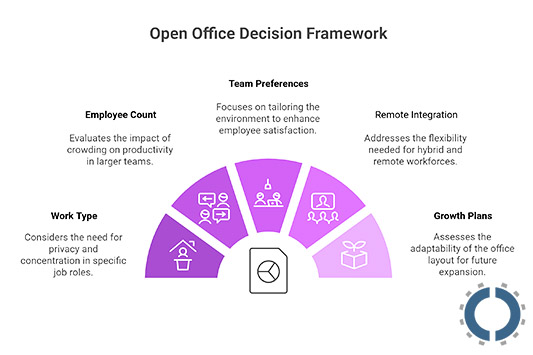 What is your type of work?
If your work involves sensitive or confidential information, an open space may not provide enough privacy.
Also, tasks that require high concentration, such as programming or expert consulting, are best done in private environments.
How many employees do you have?
Open office plans are great for small teams, but for hundreds of employees, the crowding can reduce productivity.
What are the team’s needs and preferences?
By considering employees’ work styles and preferences, you can tailor the environment to suit them and increase job satisfaction.
Is part of the team remote?
If the majority of employees work hybrid or remotely, an open office provides the flexibility needed to manage a variable on-site workforce.
What are your growth and development plans?
Open offices are easy to move and rearrange, so they are a good option for growing companies or people joining the team on a temporary basis.
Conclusion
Examining the pros and cons of open office plans in 2026 shows that this type of office can be a driving force for collaboration, transparency, innovation, and flexibility, taking businesses to a higher level in terms of cost and space efficiency.
In contrast, these spaces still face challenges such as noise, lack of privacy, high density, mental strain, and difficulties managing onsite and remote employees.
However, technological advancements, proper design solutions, and the use of hybrid workspaces will make it possible to overcome many of these limitations in 2026.
The goal of this article is to help companies gain a more accurate understanding of the characteristics of the modern workplace and decide whether an open office plan is compatible with their needs, organizational culture, and growth trajectory.
Ultimately, the answer isn’t whether open office plans are good or bad; it’s how they’re designed!

John Ofield is the owner of Collaborative Office Interiors. Houston’s trusted source for modern and commercial office furniture, office cubicles, demountable walls, office desks and tables, and complete workspace solutions. With more than 40 years of experience, he combines deep product knowledge with hands-on space-planning expertise to create ergonomic, productivity-focused work environments for businesses across Southeast Texas.