12 Easy Exercises You Can Do At Your Office Cubicle
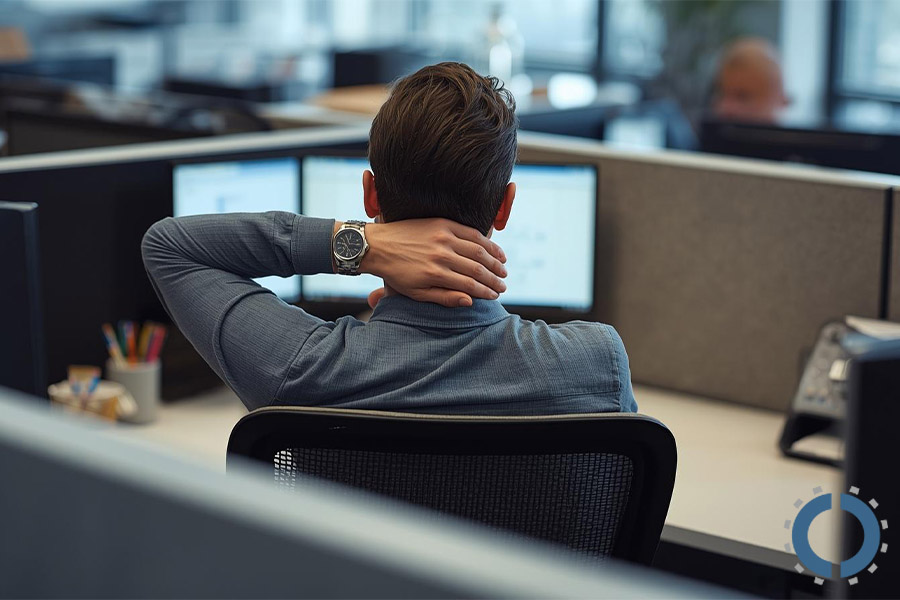
Don’t have enough time to go to the gym and do physical activity?
Are you worried about being sedentary at your desk?
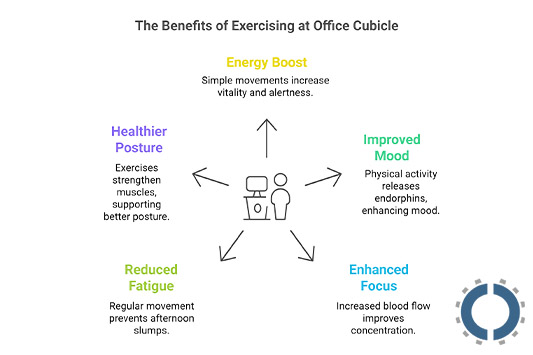
The good news is that even a few minutes of simple movement at work can boost your energy, get your blood flowing, and improve your mood and focus.
In this article, we’ll introduce the best exercises that you can do right in your cubicle Houston or at your desk, without the need for special equipment or extra time.
By following these exercises, you can stay healthy, avoid afternoon fatigue, and even turn your desk into a small, functional space for exercise.
Let’s take a look at the exercises you can do at your office cubicle!

You Might Also Enjoy: How to Remove Cubicle Shelves: Your Complete Step-by-Step Guide
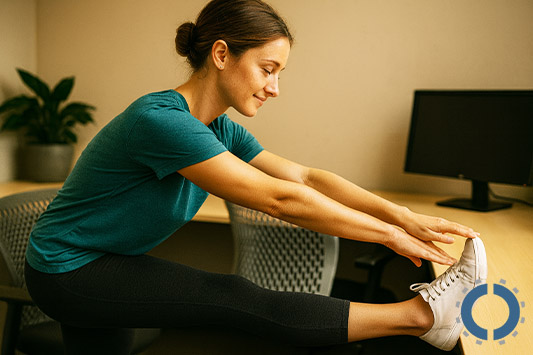 1. One-legged Hamstring Stretch
Tight hamstrings can cause lower back pain, especially after a long day sitting at an office desk.
To stretch, place one foot on a table, bend forward from the waist, and reach your hands toward your toes.
For best results, keep your back straight and avoid arching your spine.
This move not only strengthens and flexes your hamstrings and glutes, but it also reduces pressure on your back and helps prevent fatigue.
Hold each stretch for at least 20 to 30 seconds and breathe deeply to relax the muscles.
You can repeat this movement every half day to prevent muscle cramps.
Target muscles: Hamstrings and glutes
2. Seated Oblique Crunches
If you’re looking to strengthen your side abdominal muscles but don’t want to leave your private office cubicle, the seated oblique crunch is one of the best options.
This simple move effectively engages the oblique muscles of the abdomen and can help improve body shape, reduce side tightness, and keep the core muscles active throughout the day.
Just a few short repetitions can relieve the tension and pressure caused by hours of sitting and make your body feel lighter.
To start, sit straight on a chair and place your hands behind your head, similar to doing a crunch.
Bend your body to one side and try to bring your elbow closer to your hip bone on that side.
Return to the starting position and repeat on the opposite side.
Keep your spine straight and imagine a wall in front of you and behind you to prevent bending forward or backward.
Do the movement slowly and controlled to activate the oblique muscles.
For more intensity, increase the repetitions or take a short pause on each side.
By keeping your abdominal muscles tight throughout the movement, more pressure is placed on the target muscles.
Target muscles: Obliques
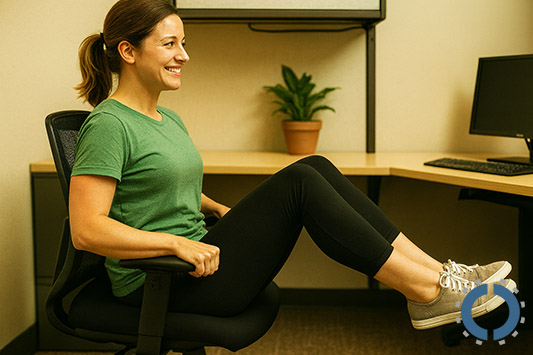 3. Seated Chair Crunches
Sit in an office chair and lean forward slightly so that your hips are near the edge of the chair, placing your hands on the armrests for stability.
Bend your knees toward your chest and try to keep your upper body as straight and vertical as possible.
Then straighten your legs and return to the starting position.
For an added challenge, lower your legs to put more pressure on your abdominal muscles.
Do the movement slowly and controlled to put maximum pressure on the abdominal muscles.
10 to 15 repetitions per set is enough, and you can do several short sets throughout the day.
Take a deep breath and exhale as you bring your knees together to increase the impact of the movement.
This simple but effective exercise helps strengthen your abs, improve your sitting posture, and reduce fatigue, all without leaving your chair or desk.
Target muscles: Abdominal muscles
4. Desk Push-ups
If you’re looking for a quick and effective move to strengthen your upper body, desk push-ups are one of the most effective moves.
This exercise engages the chest, shoulders, and arms without requiring much space, helping you get some activity in even the busiest workday.
With just a few repetitions, you can increase blood circulation and prevent muscle stiffness caused by prolonged sitting.
Start by standing facing a table or wall with your hands slightly wider than shoulder width.
Tighten your abs and keep your body aligned.
Slowly lower until your chest reaches the height of your elbows.
Then raise your body again and return to the starting position.
Be careful not to let your hips bend or sag during the movement.
The further away your feet are from the table, the harder the exercise becomes.
You can adjust the number of repetitions based on your ability level (10 repetitions or more).
To avoid strain on your back, keep your spine in a straight line.
Target muscles: Chest, shoulders, arms
You Might Also Enjoy: How to Block Overhead Light in A Cubicle: Best 8 Ways
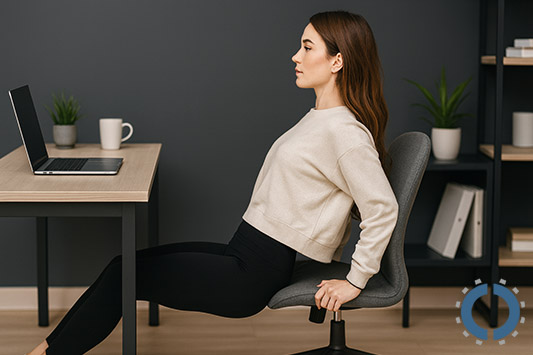 5. Triceps Dips
If you’re looking to strengthen your arm and chest muscles without the need for special equipment, triceps dips are one of the best exercises for you.
This move, which can easily be done at work, helps strengthen your triceps and can also help improve your posture throughout the day.
To do this exercise, sit in a chair.
Place your hands flat on the edge of the chair with your fingers facing away from your body.
Then straighten your legs and keep your heels on the floor.
Slowly lower yourself until your arms are almost parallel to the ground, which should feel like your triceps are contracting.
Return to the starting position and repeat this movement at least 10 times.
To avoid injury, always keep your back straight and avoid slouching your shoulders.
If you want to make the exercise more challenging, place your feet further forward or increase the number of repetitions.
Tighten your abdominal muscles with each repetition to fully engage the target muscles.
Target muscles: Triceps and chest
6. Calf Raises
One of the exercises you can do at your office cubicle is calf raises.
If you stand or sit at a desk most of the day, your calf muscles will quickly become stiff and weak.
This move only takes a few seconds and can be the best option for when you want to get a little movement at work without attracting too much attention.
To do this exercise, first stand straight and hold the edge of a table or chair to maintain balance.
Lift your heels off the ground and stand on your toes, pause for a moment.
Then slowly place your heels back on the floor.
Repeat this movement at least 10 times.
To increase the challenge, do the movement more slowly or increase the number of repetitions.
Doing this exercise several times a day helps reduce leg fatigue and prevent ankle and calf swelling.
Target muscles: Calves
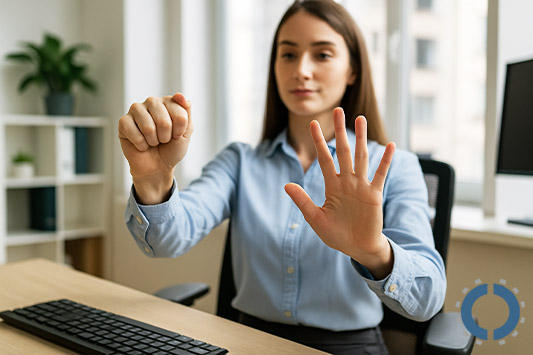 7. Hand and Finger Stretches
If you type at a computer for hours, the constant pressure on your fingers and wrists can eventually cause pain, stiffness, and even repetitive strain injuries.
Stretching your hands and fingers is one of the simplest but most essential exercises that can increase your range of motion and prevent joint stiffness.
This movement only takes a few seconds, but its effect on reducing finger tension and increasing comfort while working is impressive.
To do this exercise, first make a fist and hold it for 30 to 60 seconds.
Then open the hand and spread the fingers as far apart as possible to create a full stretch.
Repeat this cycle at least 4 times with each hand.
Do this exercise several times throughout the day to prevent fatigue and dryness in your fingers.
You can do these movements every time after a long typing session to reduce the strain on the tendons.
Target muscles: Hand muscles, fingers, and wrist tendons
You Might Also Enjoy: Top 10 Effective Ideas to Make Cubicles More Private in 2026
8. Neck Rotations
Sitting at a desk for long periods of time can put a lot of strain on your neck and shoulders, especially if your sitting posture or monitor height is not appropriate.
Therefore, one of the exercises you can do at your cubicle to prevent physical pain is neck rotation.
Neck rotation is one of the simplest and most effective seated exercises that can reduce muscle tension.
This exercise can also improve blood circulation and reduce pain caused by prolonged computer work.
Just a few small movements throughout the day can significantly create a feeling of lightness and relaxation in the upper body.
First, lower your chin toward your chest and slowly rotate your neck one full turn.
Then lift the chin and bend the head to each side for about 10 seconds to create a deeper stretch.
Repeat this exercise whenever you feel tightness or pressure.
Perform the movement slowly to avoid putting extra pressure on the vertebrae.
Keep your shoulders down and relaxed as you rotate to make the stretch more effective.
You can do this exercise a few times before starting work or during short breaks to prevent cumulative neck pain.
Target muscles: Neck muscles and upper shoulders
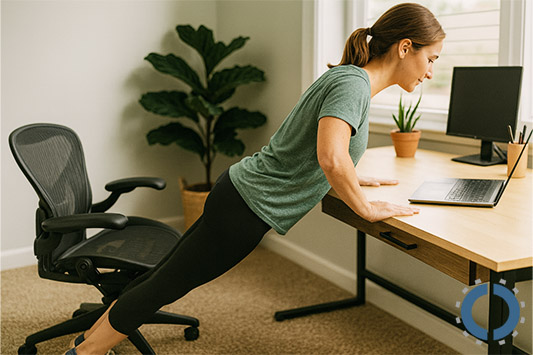 9. Desk Pushups
Another exercise you can do at your office cubicle is the desk push-up.
This is a quick and effective exercise to strengthen your upper body without leaving your desk.
This simple move targets the chest and triceps, which can help improve your upper body strength and posture throughout the day.
Even a few minutes of this exercise can boost your energy and prevent fatigue throughout the day.
To do this exercise, stand in front of your desk and place your hands slightly wider than shoulder-width apart, arms straight.
Then slowly lower your body until your chest is close to the table.
Return to the starting position.
Repeat this movement at least 10 times.
Keep your back and body straight during movement to keep the pressure on the target muscles and prevent injury.
You can adjust the number of repetitions or the speed of movement to suit your fitness level.
By doing this exercise throughout the day, not only will your upper body muscles be strengthened, but your focus and energy will also increase.
Target muscles: Chest and triceps
You Might Also Enjoy: How to Hang Things on Cubicle Walls: 2026 Guide?
10. Alternating Toe Touches
If you’re looking for a quick move that will both get you up from your desk and engage your core muscles, alternating toe touches are a great choice.
This exercise helps increase mobility and activate the abdominal muscles and hip flexor muscles.
With a few simple repetitions, you can increase blood flow, wake up your body, and break away from the monotony of prolonged sitting.
To do this exercise, stand straight and keep your body stretched.
Raise one leg and simultaneously try to touch the tips of your toes with the opposite hand.
Return to the starting position and do the same movement with the other side.
Keep your chest up throughout the exercise and don’t let your back slouch.
It is better to do the movement in a controlled manner to engage the abdominal muscles more.
If balance is difficult, first raise your leg less and gradually increase the range of motion.
Target muscles: Abdominal muscles and hip flexors
 11. Chair Hamstring Curls
If you want to strengthen your hamstrings and glutes while you are in your cubicle and you have enough space on the floor for a movement, the chair hamstring curl is one of the most effective options.
This exercise engages the hamstrings and glutes simultaneously and can reduce stiffness and weakness in the lower body muscles that often result from prolonged sitting.
With just a few repetitions, deep activation occurs in the leg muscles, which also helps improve blood flow and reduce pressure on the back.
At the beginning of the exercise, lie on the floor and place your heels on the edge of a chair.
Lift your hips off the ground so your body is in a straight line.
Pull your heels toward your hips and then straighten your legs again, keeping your hips high throughout the movement.
Repeat this movement several times to activate the muscles in the back of the leg.
For greater effect, do the movement slowly and pause for a second while keeping your hips up.
Target muscles: Glutes and Hamstrings
12. Squats
Squats are one of the most effective exercises you can do at your cubicle that increase blood flow and activate the lower body muscles while working.
This no-equipment exercise engages the buttocks, thighs, and legs.
Doing a few sets of squats can increase your heart rate, boost your energy, and reduce daytime fatigue.
To begin this exercise, stand straight with your feet slightly wider than shoulder width apart.
Bend your knees and lower yourself down as if you were going to sit on an imaginary chair.
Keep your abs tight and don’t let your knees go past your toes.
Return to a standing position and do a few repetitions to activate your lower body muscles.
To help maintain balance, hold your arms forward and tighten your abs.
This version puts less strain on the knees, but still has a great effect on the hips and thighs.
Target muscles: Glutes, hamstrings, and quads
Conclusion
In our article “Exercises You Can Do at Your Office Cubicle,” we mentioned that even the smallest workspace can become a starting point for change.
Our goal in writing this article was to show that health and mobility should not be sacrificed to a desk job or a busy daily schedule.
With a few simple movements, you can restore the flow of energy to your body, refresh your mind, and escape the monotony of the day.
These exercises are designed not only to strengthen muscles and reduce pain caused by sitting, but also to prove to you: every office furniture Houston, every desk and chair, and every few short minutes can be transformed into an opportunity for a more active and joyful life.

John Ofield is the owner of Collaborative Office Interiors. Houston’s trusted source for modern and commercial office furniture, office cubicles, demountable walls, office desks and tables, and complete workspace solutions. With more than 40 years of experience, he combines deep product knowledge with hands-on space-planning expertise to create ergonomic, productivity-focused work environments for businesses across Southeast Texas.