Top 10 Considerations for a New Office Plan
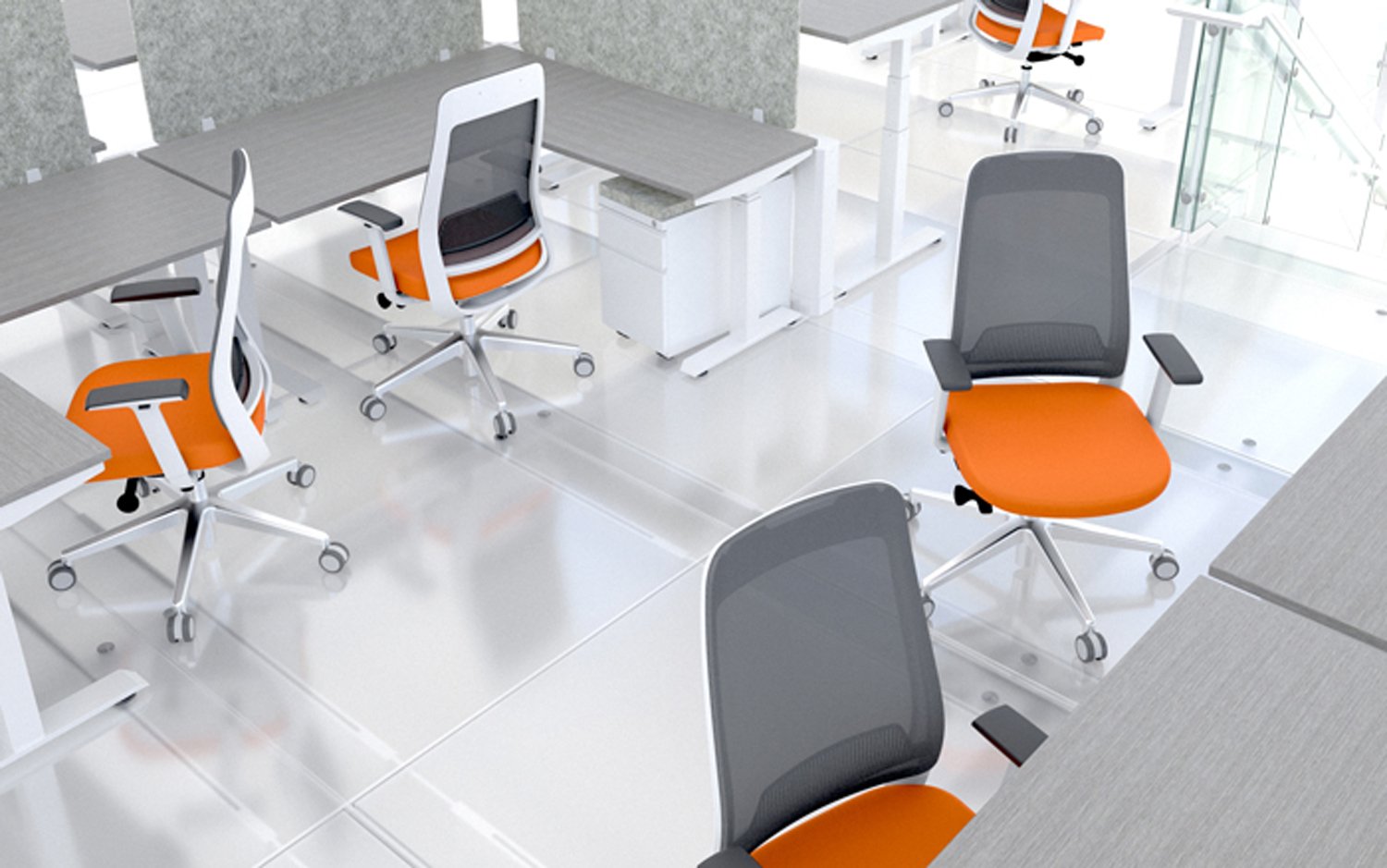
Time to move or expand into a new office? Use a scientific approach to creating your new office plan. The following seven-point guide to planning your ideal office layout will help your employees work more productively than ever, at the same time, laying a foundation for future business growth.
Furniture space planning is experiencing significant changes. More companies are moving away from fixed offices and office cubicles to the “open office” plan. Employers implementing these new or remodeled open office layouts are hoping for quick, tangible results from their investment. The most common goals are:
- Attracting new talent to the company.
- Minimizing real estate costs in expensive markets by increasing density.
- Breaking down information silos.
- Promoting productivity and innovation.
However, current staff and potential talent may have opposing opinions about open office designs. Younger generations of employees often prefer open office floor plans, which can feel as comfortable as working in a coffeehouse. Older generations may find the open layout uncomfortable due to perceptions of privacy loss and increased noise.
Finding a solution that satisfies both of these goals and perceptions is not uncomplicated. Here is a list of seven considerations to guide you in the process of managing the challenges of your office space planning.
1. Understand Your Actual Office Space Planning Requirements
If you are deciding on a new office or remodeling your existing layout, start by writing the top three reasons (in order of priority) for this decision.
Sometimes, reasons are clear-cut: a new merger or acquisition, the lease is ending, moving to a new location, or a need for consolidation of space between existing departments or divisions. Other reasons may be less clear-cut; even so, you should take time at the beginning of your planning process to verbalize, understand, and challenge each of your assumptions. As an example, if you are running short on space, could you increase density by redesigning your current office? Are you simply unhappy with the layout of your current office? Could renovation be the solution?
Now, identify the three highest priorities or goals you have for the new space. This could include:
- Preparing for growth
- Increasing efficiency and productivity
- Projecting a more modern brand to both internal and external audiences
- Instilling pride in your employees
- Attracting younger talent.
Reflect on these top three goals as you consider the functions of each department in your office. If your goal is to lower real estate costs by increasing density, what impact will that have on each department individually? If one of your goals is encouraging innovation and breaking down silos, which departments would benefit from being co-located?
Finally, consider practical requirements, like having room for the company to expand, allocating departmental storage, and technology space like computer servers. Also, with a collaborative office plan, files will need to be available but still secured to maintain confidential information.
2. Proper Office Layout Design Helps Build Your Brand
What is the brand you want to project to the world and impress upon your internal company culture? People can make decisions quickly. Visitors to your company will have a positive or negative impression within seconds, so having a visual image that promotes your company’s brand and vision is essential.
The visual design of a company’s office sends a strong message to the workforce. It can serve to inspire your employees by supporting your company values and that the company cares about them and what they do.
3. Careful Office Space Planning Will Prepare You for Future Growth
Growth is the aspiration of every business.
But how do you plan for it?
Let’s rephrase this to come up with the answer.
Growth is a desirable form of change. Therefore, to successfully plan your office space, we need to consider ways to accommodate future change.
One of the greatest inventions in the world of office planning and managing change is modular office furniture. Quickly installed, it’s virtually indestructible, it has a modern appearance, and, most notably, as your needs change, it can be extended or re-assembled on-site to create different layouts.
4. Encourage Collaboration

Typically, one of the top goals for many employers considering a new office design is increasing productivity by encouraging collaboration among workers.
This could be a fantastic benefit of a new office layout — if done correctly.
Per research from Cornerstone OnDemand, the “hot zone” for collaboration has a maximum radius of 25 feet. Researchers discovered a thirteen percent gain in productivity and a seventeen percent gain in effectiveness by seating high-quality contributors next to high-volume contributors. Basically, the quality of work from the high-volume contributors improved, and the high-quality contributors got faster.
Distracting noise in open offices is a concern that should be addressed during the planning stage. There are numerous opportunities in the design/build process to isolate undesirable ambient noise and vibration. One way is to create dedicated quiet spaces so employees can focus on challenging tasks.
Keep in mind that collaboration opportunities are not limited to office desk areas. Your office layout can include opportunities for spontaneous meetings and the exchange of ideas. Be sure to plan space for casual/spontaneous meeting areas with comfortable seating in addition to cafeterias.
5. Create Healthy Workspaces for More Productive Employees
Designing your new office plan is the best time to create a healthy, safe place for your employees to work.
Avoid accidents from slips, trips, and falls by designing open, well-lit, non-slip paths with secure hand-holds for steps. Make sure that storage is secure. Ensure that employees have ergonomic office chairs and desks that conform to their size and proportions. Moreover, acknowledge the need to move throughout the day, avoiding the consequences that sitting too much can have on your health. Sit/stand desks allow employees to raise or lower their work surface at the press of a button for improved cardiovascular health.
Last but not least, consider the inherent benefits of light and open areas in your office layout. It makes for a more pleasant place to work, and many modern design elements help save energy costs, improving environmental sustainability.
6. Special Considerations for Small Office Layouts
What about small offices?
We haven’t forgotten you. While you likely won’t be building a cafeteria, you still want to provide some of the same benefits larger company offices offer.
The key to office layouts for small offices is flexible, versatile furniture, often custom-designed to the space available.
Examples could include kitchens that transform into meeting rooms or custom mobile desks that can be moved around, creating individual workspaces, then later pushed together, creating a custom worksurface or conference table.
7. Stay on Budget: Use Our Budget Calculator for Office Layout Planning
How much square footage is your new office?
The estimate is preliminary, of course, but it’s an essential first step in the process of planning. Now it’s time to meet with your Architect, your Space Planner, and Collaborative Office Interiors. See our integrated services.
Consider whether leasing or renting best fits your budget, or if financing works best for your company and your new office space.
8. Sustainability and Well-Being
The sustainability and wellness section of a new office design refers to the fact that the work environment should be both environmentally optimal and consider the physical and mental health of employees.
One of the most practical solutions in this field is the use of energy-efficient design and materials.
This includes selecting the right insulation, installing double-glazed windows, utilizing efficient cooling and heating systems, and employing LED lighting, which reduces both energy costs and the organization’s carbon footprint.
Another solution is natural light, plants, and a connection with nature.
The design should allow maximum sunlight into the space, place green plants in different parts of the office, and consider a landscape or green wall whenever possible.
These things help reduce stress, increase productivity, and create a positive feeling among employees.
In terms of well-being, providing facilities related to health and well-being, such as restrooms, relaxation spaces, small gyms, or even yoga rooms, allows employees to recover energy and reduce mental stress.
Such spaces help increase job satisfaction and create a positive organizational culture.
Also, paying attention to the quality of the indoor environment, including healthy air with proper ventilation, standard and adjustable lighting, and acoustic design to reduce noise pollution, plays an important role in concentration, relaxation, and productivity.
9. Technology and Infrastructure
The technology and infrastructure component plays a fundamental role in designing a new office plan.
In today’s world, the productivity and even survival of many organizations depend on the existence of stable and reliable communication systems and technologies.
The first step is to provide high-speed internet and stable Wi-Fi throughout the office.
This is especially important in hybrid work models and when employees need to connect to systems from anywhere in the office.
In addition, special attention should be paid to supporting remote working and video conferencing tools.
Meeting rooms should be equipped with high-quality audio and video equipment to ensure uninterrupted online meetings.
Employees should be able to charge their laptops, phones, or other devices without restrictions and easily.
Also, the importance of data security, backups, and server rooms should not be overlooked.
Even if part of the services is provided in the cloud, there is still a need for secure and standardized infrastructure to protect critical information.
 10. Employee Experience and Culture Fit
Paying attention to employee experience and culture fit can be one of the most important factors in the success of a new office plan.
The workspace should reflect the organization’s mission, values, and personality.
When the office design is aligned with the brand identity, employees feel like they are part of the organization, which helps increase their motivation and commitment.
One practical method in this regard is to pay attention to colors, visual elements, branding, and the overall aesthetics of the environment.
Color choices can have a direct impact on a person’s mood.
For example, bright, energetic colors are inspiring for creative companies, while muted, formal colors convey more confidence and seriousness for financial or legal organizations.
On the other hand, the layout of the space should strike a balance between collaboration and team interaction, and concentration and privacy.
Businesses with open and creative cultures benefit from more open and collaborative spaces, while environments that require high concentration should have more quiet rooms and spaces.
To enhance the employee experience, you can involve them in the design process.
Conclusion
Designing a new office plan is a multidimensional process that directly impacts productivity, organizational culture, and even brand image in the minds of customers.
In the article “Top 10 Considerations for a New Office Plan,” we saw that success in this path requires attention to a set of key factors, from location selection and technological infrastructure to health, well-being, and organizational culture.
When these 10 principles are integrated into the design, the result will be a space that both increases employee productivity and satisfaction and prepares the organization for future growth and change.

John Ofield is the owner of Collaborative Office Interiors. Houston’s trusted source for modern and commercial office furniture, office cubicles, demountable walls, office desks and tables, and complete workspace solutions. With more than 40 years of experience, he combines deep product knowledge with hands-on space-planning expertise to create ergonomic, productivity-focused work environments for businesses across Southeast Texas.