Selecting The Right Office Cubicle Wall Height
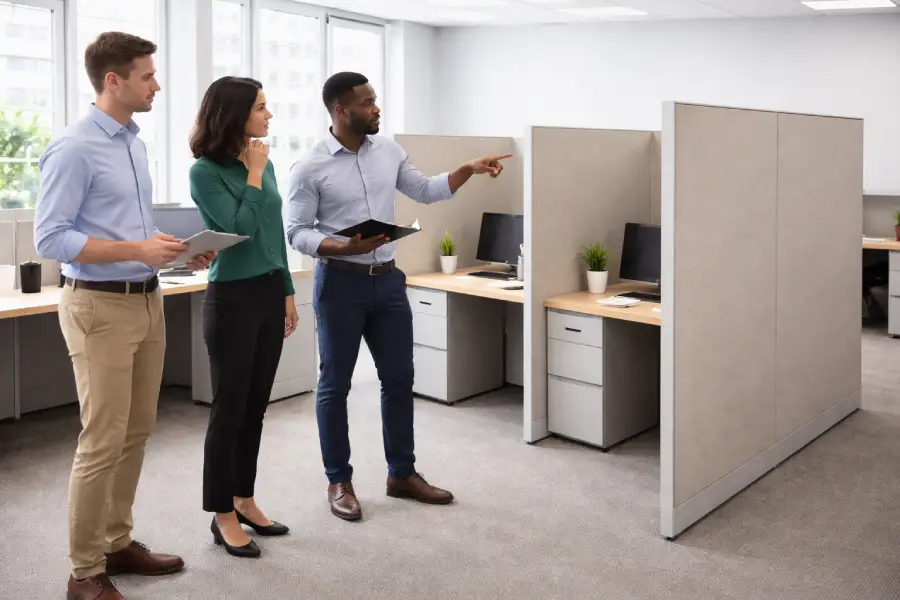
Choosing the right office cubicle wall height isn’t just about how your office looks; it’s about making your workspace actually work for you.
The truth is, this single decision affects privacy, focus, collaboration, natural light, acoustics, and even how productive your team becomes.
Now the question is: how to select the right office cubicle wall height?
To select the right cubicle wall height, balance privacy and collaboration: use 42″–48″ walls for open interaction, 67″–72″ walls for more privacy, ensure natural light isn’t blocked, and choose modular panels for future flexibility.
Many people assume all heights are pretty much the same, but a few inches can make a huge difference in how your team experiences the office every day.
Whether you’re working in a downtown Houston skyscraper or a traditional office, the best cubicle height aligns with your workflow, privacy needs, lighting, supervision style, and future growth plans.
In this guide, we’ll walk you through the three main height categories—Low, Medium, and High—so you can choose confidently based on what your team truly needs, not just what looks good.
Let’s take a look at the right office cubicle wall height for your office!
Cubicle Wall Height Basics: What “Low / Medium / High” Really Means
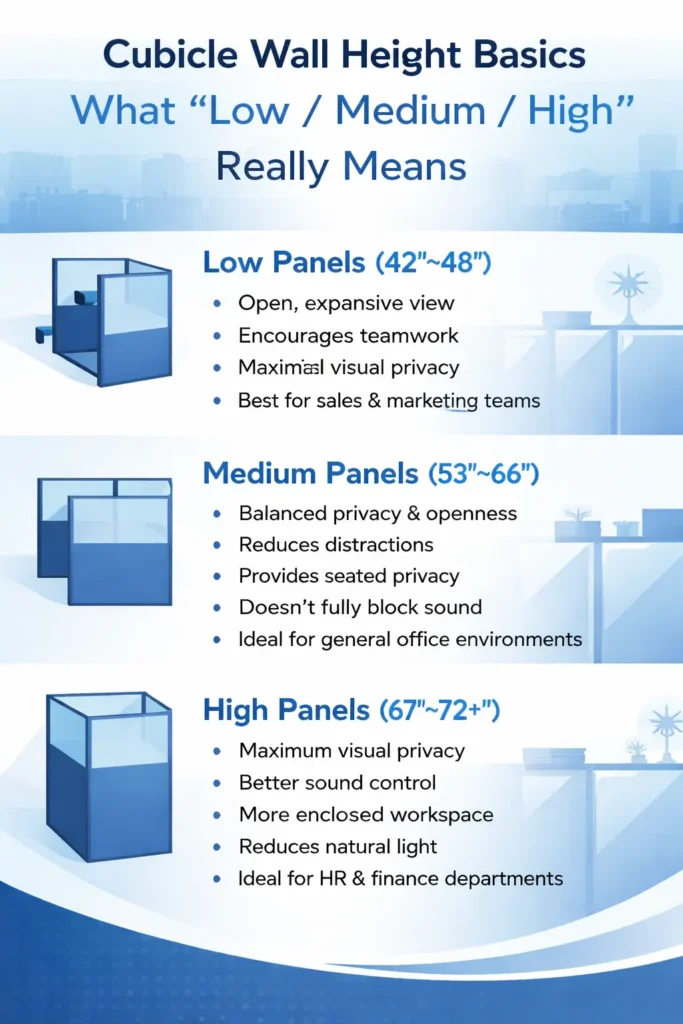
Low Panels (42″–48″)
Low cubicle panels create an open, expansive view across the entire workspace and the surrounding office furniture Houston.
When seated or standing, employees can easily see and communicate with each other.
This panel style is ideal for teams that require constant collaboration and prefer an open office environment.
Key benefits include encouraging teamwork, maximizing natural light throughout the space, creating a modern and airy atmosphere, and enabling straightforward managerial oversight.
However, there are important trade-offs to consider.
Visual privacy is minimal, sound control is limited, and distractions can increase in offices with frequent phone activity.
These panels work best for sales teams, marketing departments, tech startups, and project-based groups focused on collaboration.
Medium Panels (53″–66″)
This height range is the most popular choice in professional office environments today.
Medium-height panels provide seated privacy while still allowing visibility when standing.
This creates a balanced approach between private focus and open collaboration, while reducing distractions during work.
The main limitation is that these panels don’t fully block sound, and people remain visible when standing.
This height works well for engineering teams, call centers, accounting departments, and offices that need a mix of concentration and interaction.
It strikes the right balance for most general business needs.
High Panels (67″–72″+)
High panels create strong visual separation and offer a more enclosed, private workspace.
Main benefits include maximum visual privacy, better control of direct sounds, reduced distractions, and a more confidential working environment.
There are some downsides to consider, including reduced natural light flow, a potentially cramped feel in smaller spaces, and higher installation costs and complexity.
These panels are best suited for HR departments, finance teams, legal professionals, and medical offices that regularly handle sensitive information and require higher confidentiality.
You Might Also Enjoy: 6 Annoying Office Cubicle Neighbors and How to Handle Them
The Strategic Framework for Selecting the Right Height
Instead of guessing, use this structured approach.
1. Analyze Your Work Style
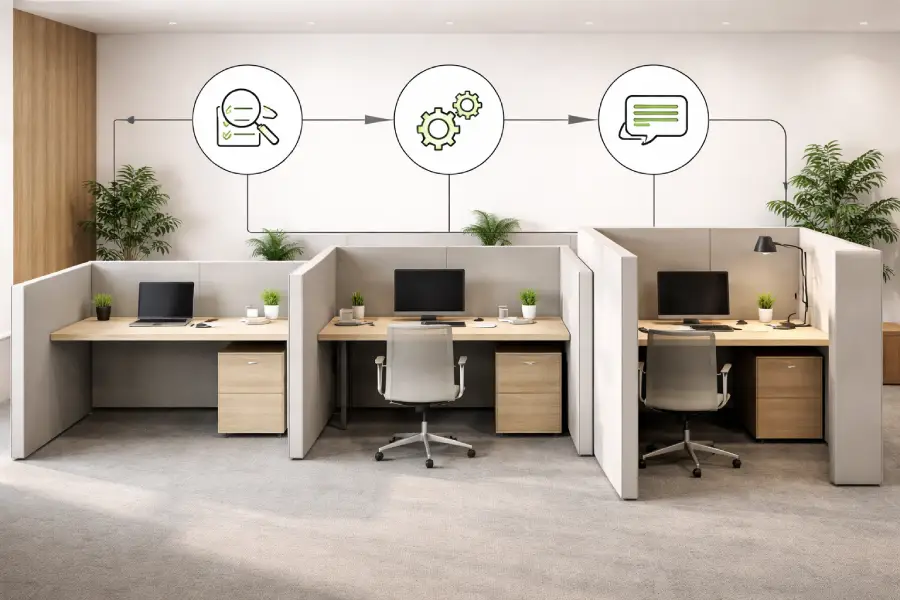
First, look at how your employees work.
Is the environment based on teamwork?
Are employees often on the phone?
Do they need deep focus for their tasks?
Do they handle private information every day?
For example, a sales team that talks constantly might do best with 53-inch panels.
However, a finance department dealing with sensitive data may need 67-inch panels or higher.
Your cubicle height should support the workflow, not get in the way.
2. Visual Privacy vs. Sound Privacy
Many companies make a mistake here.
A 53-inch panel can block your view when you are sitting, but it will not hide your conversations.
Higher panels reduce direct noise, but they are not fully soundproof.
If keeping conversations private is important, you need more than just height.
You should also use acoustic ceiling tiles, carpets, fabric panels, and white noise systems.
Height helps, but good sound control requires several different layers.
You Might Also Enjoy: Can Your Office Chair Impact Your Health? Experts Say Yes!
3. Office Layout and Natural Light
Houston offices range from downtown skyscrapers to large medical and legal centers.
In these offices, natural light is very valuable.
If you install 72-inch panels everywhere, you might block the light from reaching the middle of the room.
In crowded layouts, tall cubicle walls can also make the office feel too closed-in.
A common solution in Houston is “hybrid zoning.”
This means putting short panels near the windows and higher panels in the inner areas of the office.
4. Impact on Supervision and Company Culture
Panel height affects office culture more than most people think.
Low panels increase transparency and encourage quick, natural conversations.
They support a culture of teamwork.
On the other hand, high panels help employees focus on their own work and reduce distractions.
You must decide if you want high interaction and an open view, or controlled privacy with fewer interruptions.
5. Follow Building and Safety Rules
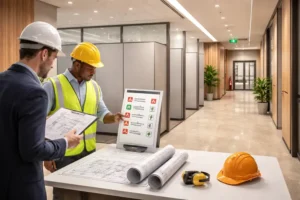
Before you install high panels, make sure they follow local safety laws.
You need to check fire safety rules, sprinkler coverage, and ensure hallways are wide enough for emergency exits.
Many high-end buildings in Houston have very strict guidelines.
Ignoring these factors can lead to extra costs and the need to redo the work later.
6. Plan for Future Growth
High panels use more materials, cost more money, and take more time to move.
If you expect your company to grow or your departments to change, it is better to use modular systems that are easy to adjust.
Many growing companies in Houston choose medium-height panels because they offer the best flexibility for the future.
You Might Also Enjoy: How to Take Apart Cubicle Walls: 2026 Step-by-Step Guide
Recommended Heights for Each Department
- Sales and Call Centers: Use 53″ to 66″ panels. This gives a good balance between teamwork and privacy while sitting.
- Marketing and Tech Teams: Use 42″ to 48″ panels. These heights help with teamwork and sharing new ideas.
- HR and Finance: Use 67″ or higher panels. These are best for keeping work private and helping people focus.
- Legal Offices: Use 67″ or higher panels. These are great for checking documents and having private talks.
- Engineering Teams: Use 53″ to 66″ panels. This offers a good combination of teamwork and quiet time for technical work.
- Medical Billing Departments: Use 67″ or higher panels. These protect private medical information and sensitive talks.
Practical Design Strategies That Work
Mix Different Heights
Not every department needs the same panel height.
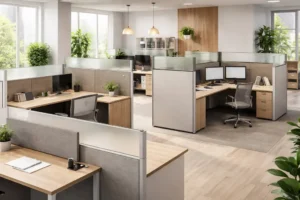
You can use 42-inch panels in teamwork areas, 66-inch panels for daily operations, and 72-inch panels for private tasks.
This increases productivity while keeping the office feeling open and bright.
 Use Glass Toppers
Glass or semi-clear panels can make your cubicles higher without blocking natural light.
This keeps the office looking open.
Many professional offices in Houston use this method to give employees privacy without making the workspace dark.
Add Desk Privacy Screens
Instead of using full panels, you can add small privacy screens or acoustic dividers directly to the office desks.
These half-height dividers are a great way to save money and improve how the office works.
Common Mistakes to Avoid
Many companies make the same mistakes when choosing panel heights.
For example, they pick the highest panels without looking at how their teams actually work.
They also often assume that high panels will fix all noise problems, but this is rarely true.
Other common errors include ignoring safety rules, blocking natural light, and choosing a layout that is hard to change in the future.
It is important to plan ahead so you don’t have to redo the work later.
You Might Also Enjoy: Which Home Office Furniture Sets Are Best for Productivity?
Conclusion
There is no perfect height for every office.
The right choice depends on your team’s daily tasks, privacy needs, and noise levels.
You also need to consider your budget, building rules, and plans for future growth.
In a fast-growing city like Houston, businesses don’t just pick panels based on how they look.
They plan their layouts strategically.
Choosing the right height does more than just divide a room; it improves your workflow and helps your team perform better.
If you are planning a new office or a redesign, start with a professional space analysis.
Making the right decision today will save you time, money, and stress tomorrow.
Frequently Asked Questions
1. Is 53 inches enough for privacy?
It provides good visual privacy while you are seated, so you won’t be easily distracted. However, it’s not enough for private phone calls or sensitive conversations.
2. What is the most common cubicle height?
Most professional offices stay between 53 and 66 inches. This range is the “sweet spot” because it balances privacy with an open office feel.
3. Do taller cubicles reduce noise?
They help block direct sound and make your workspace feel quieter. But remember, they aren’t fully soundproof since noise still travels over the top.
4. Can I mix different heights in one office?
Yes, and it’s actually the smartest strategy. You can use lower panels for team collaboration and higher ones for departments that need to focus.

John Ofield is the owner of Collaborative Office Interiors. Houston’s trusted source for modern and commercial office furniture, office cubicles, demountable walls, office desks and tables, and complete workspace solutions. With more than 40 years of experience, he combines deep product knowledge with hands-on space-planning expertise to create ergonomic, productivity-focused work environments for businesses across Southeast Texas.