Can Your Office Chair Impact Your Health? Experts Say Yes!
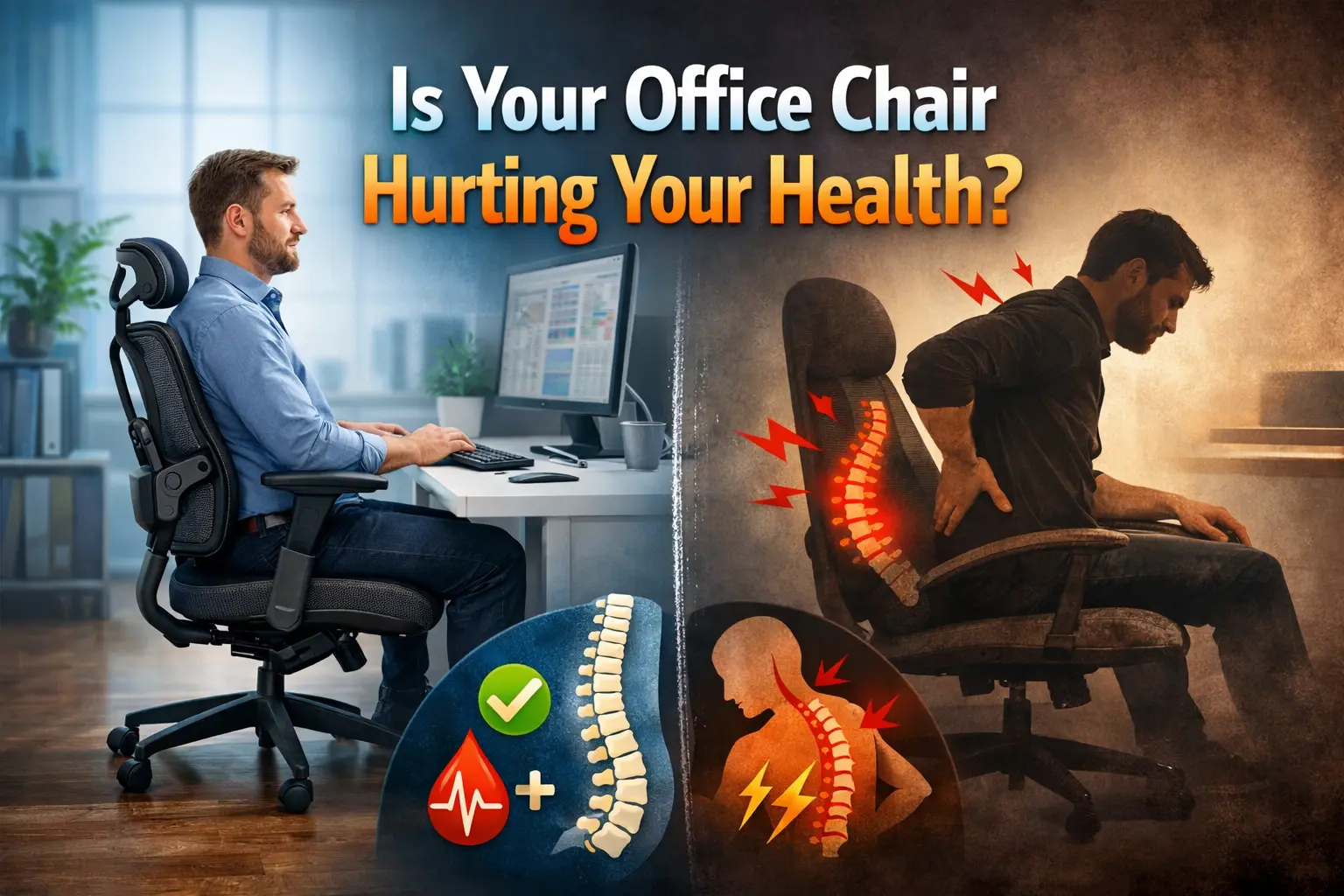
According to the CDC and OSHA, prolonged sitting and poor workstation setup are directly linked to musculoskeletal disorders and chronic pain in office workers.
Here’s the truth: if you spend long hours sitting at your desk every day, you need to think twice about the chair you choose.
Many people aren’t even aware that sitting incorrectly can silently damage their health.
Houston experts stress that a proper office chair does more than just give you comfort; it actually protects you from serious problems like back pain, neck pain, and chronic muscle disorders.
This article gives you practical, science-based tips to help you choose the right chair and use it correctly.
When you pay attention to your seating, you’re not just buying furniture, you’re investing in your health, your comfort, and your productivity.
Let’s dive in and discover how a simple chair change can transform your workday and your life!
Does Your Chair Choice Matter for Your Health?
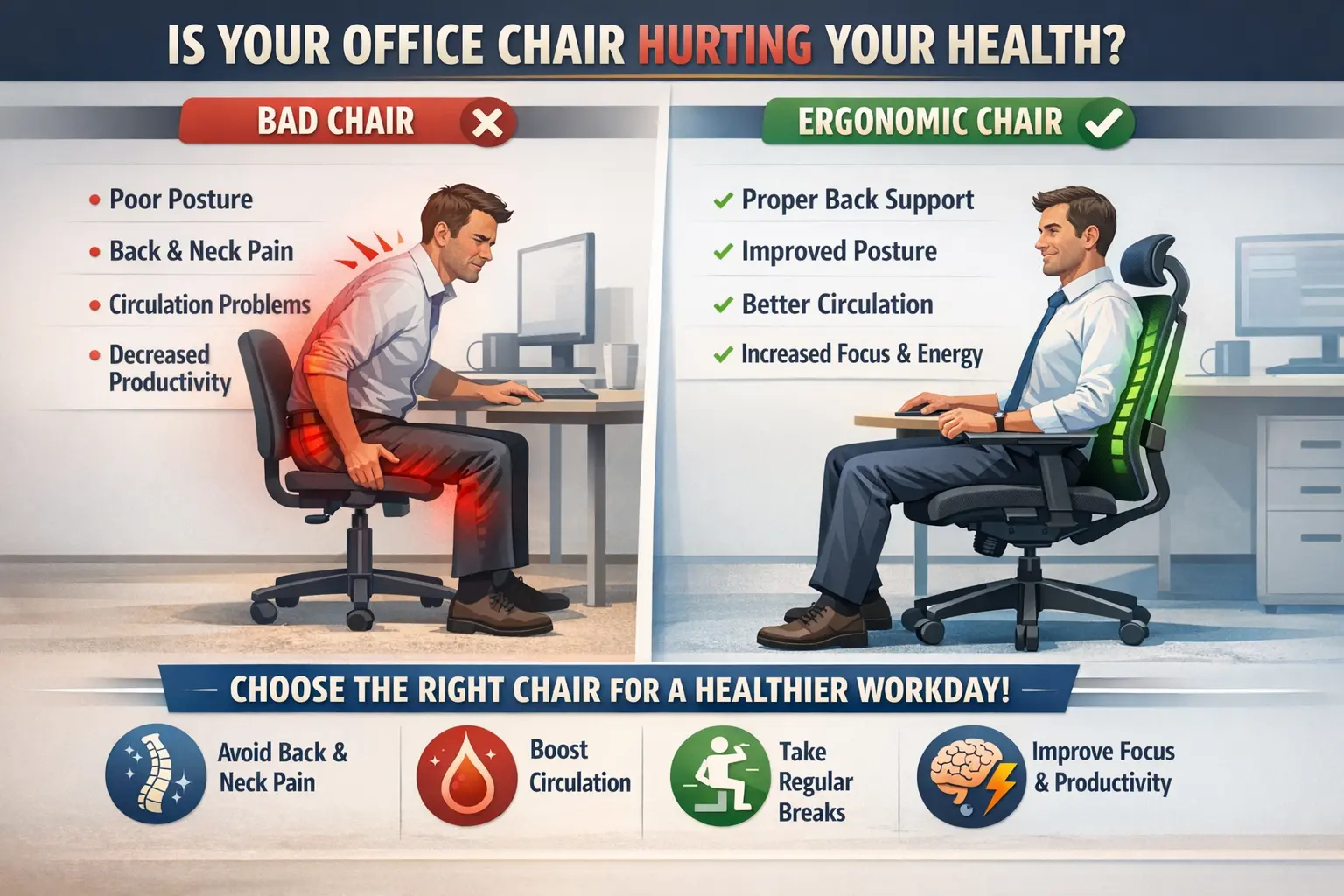
Yes, your office chair can directly impact your health. A poorly designed or improperly adjusted chair can lead to back and neck pain, poor posture and spinal stress, reduced blood circulation, and increased fatigue and lower productivity.
When you sit in a fixed posture all day, unnatural pressure builds up on your lower back and neck discs, slowly causing damage.
Research published in the journal Applied Ergonomics shows a direct link between poor posture and increased risk of chronic back and neck pain among office workers.
According to the Bureau of Labor Statistics, musculoskeletal disorders account for a significant percentage of workplace injuries each year, many of which are linked to poor seating and workstation setup.
Even in Houston, reports reveal that many offices still don’t have proper ergonomic chairs available, putting employee health at real risk.
The message is clear: when you ignore the quality of your chair, you’re not just sacrificing comfort, you’re risking your physical well-being.
A proper ergonomic chair isn’t a luxury; it’s a necessity for anyone who wants to stay healthy and productive at work.
Don’t wait until pain starts, invest in your seating today!
Hidden Health Risks: Why Bad Chairs Hurt More Than You Think
Sitting on the wrong chair isn’t just uncomfortable; it’s harmful.
Here are the key health risks you need to know about:
- Musculoskeletal Problems: Non-ergonomic chairs put the wrong pressure on your spine and joints.
Over time, this leads to chronic pain, damaged discs, and serious conditions like scoliosis.
These problems develop slowly, often without warning, and gradually affect your quality of life and ability to work.
- Posture and Spine Health: When your chair lacks proper lower back support, you naturally round your shoulders forward.
This bad posture can cause spinal misalignment and lead to chronic fatigue.
If your chair height or backrest isn’t adjusted correctly, extra pressure builds up on your discs and muscles, causing pain that spreads across your entire body.
- Blood Circulation Issues: Sitting for long hours without breaks reduces blood flow to your legs.
This can cause swollen feet, varicose veins, and even increase your risk of deep vein thrombosis (DVT)—a serious blood clot condition. The CDC specifically notes that prolonged sitting with limited movement can increase the risk of blood clots, especially in sedentary work environments.
Houston health experts recommend that even in well-equipped offices, short breaks for movement and stretching should be mandatory.
- Focus and Mental Health: Constant physical pain causes mental fatigue, reduces concentration, and kills productivity.
Employees who sit in poor chairs often experience greater discomfort and stress, which can harm their decision-making skills and job satisfaction.
When your body is uncomfortable, your mind can’t perform at its best.
Your chair is not only furniture but also a health tool.
Ignoring its quality means ignoring your well-being. Choose wisely!
What Houston Experts Say About Chair Health
When it comes to workplace health, Ergonomics guidelines from organizations like OSHA and the Mayo Clinic emphasize that a proper office chair should include adjustable height, lumbar support, and flexible positioning.
Ergonomics specialists and health consultants all agree that a good office chair should have adjustable height, proper lower back support, and the ability to change angles.
Before you buy, they recommend testing the chair for at least 10 minutes and adjusting it correctly for each user.
Local experience shows that Houston offices investing in ergonomic chairs don’t just protect their team’s health, they also increase productivity and job satisfaction.
When workers feel comfortable, they perform better and take fewer sick days.
Your chair is an investment.
When you prioritize ergonomics, you’re investing in your team’s future health and success.
Make the right choice today!
Main Features of an Ergonomic Chair
Here are the features that make all the difference:
- Adjustable Height
A good chair should let you adjust the height so your feet rest flat on the floor and your knees form nearly a 90-degree angle.
This simple adjustment reduces pressure on your discs and joints while improving blood circulation throughout your day.
- Lower Back (Lumbar) Support
Proper support for your spine’s natural curve reduces disc pressure and prevents back fatigue and pain.
Standard ergonomic chairs come with adjustable backrests that adapt to your body shape.
- Armrests and Tilt Control
Armrests and tilt adjustment reduce strain on your shoulders and neck.
These features help you sit in a more comfortable position and work for long hours without getting tired.
- Ventilation and Comfort
Chairs with proper airflow keep air circulating and reduce sweating on your lower back.
Better comfort means less distraction and better focus throughout your workday.
Don’t settle for less.
When you invest in these features, you’re investing in years of healthy, productive work.
Your body will thank you!
Quick Office Upgrades That Boost Your Health
Let’s be honest! Most of us spend 8+ hours a day sitting.
But you don’t need to overhaul your entire office to protect your body.
When buying a chair, ergonomics should be the number one priority.
Models that only have an attractive appearance but lack practicality are not worth the investment.
This decision, in the long run, will not only reduce pain and discomfort but also increase your productivity and comfort in the workplace.
Here’s how to improve your workspace in minutes:
- Adjust Your Chair Height: Feet flat on the floor. Knees bent at 90 degrees.
That’s the sweet spot. If your feet dangle, you’re adding pressure to your discs and hips.
- Add Lumbar Support: Don’t wait until you buy a new chair.
A lumbar cushion or even a rolled towel can do the trick.
Your lower back will thank you within the first hour.
- Take Movement Breaks: Set a timer and take short breaks to stand up and walk around every 30-60 minutes.
Moving your body improves circulation and keeps you energized.
- Consider a Sit-Stand Desk: If possible, use a height-adjustable desk that lets you alternate between sitting and standing.
This feature reduces body strain and improves blood flow like nothing else.
- Backrest Angle Optimization: The backrest angle should not be either too vertical or too reclined.
It’s better if it tilts slightly backward to give you a more comfortable feeling.
This precise adjustment reduces pressure on the spine and provides better support.
You don’t need perfection.
Just make these changes today and notice the difference in a week.
Your body pays attention to what you do, not what you plan.
Understanding the Productivity and Health Connection at Work
What Makes the Workplace Work Well
Health and work performance go hand in hand.
When you set up your workspace right, you do more than prevent aches; you boost focus, speed up task completion, and make daily work feel easier.
Good conditions keep people sharp.
Health Directly Shapes Performance
How you feel physically and mentally determines how well you work.
When your body aches or your mind feels stressed, your attention drifts, and work quality drops.
People with back, neck, or shoulder issues often struggle with routine tasks.
Conversely, healthy workers bring more energy to the day.
They move faster, make fewer mistakes, and tackle complex work with ease.
Mental health matters just as much.
Stress and anxiety cloud problem-solving, slow down decision-making, and strain relationships with coworkers, all of which drag down team output.
Comfort, Focus, and Well-Being: One Unit
Comfort at work equals focus.
When the environment fits your body, you can concentrate on harder tasks for longer periods.
Ergonomic support for your back, neck, and shoulders means hours of work without the usual end-of-day fatigue.
Employees with physical comfort have more mental energy for their actual duties.
A comfortable space cuts tiredness and lifts overall well-being.
The outcome? Teams that are physically and mentally at ease perform better and deliver stronger results.
What Do Leaders and Teams in Houston Say?
Business owners and workers in Houston increasingly recognize that quality office equipment matters. The choice of furniture shapes productivity in measurable ways.
Many Houston managers note that ergonomic chairs and sit-stand desks do more than reduce injury; they improve team morale and overall efficiency.
Workers feel that when their comfort matters to the company, they feel valued, too.
This satisfaction translates to higher motivation and better commitment to their work.
This kind of investment benefits everyone.
Employees get healthier and happier.
Companies get better output and stronger retention.
Conclusion
Choosing an ergonomic office chair is about more than comfort; it’s a decision that protects your long-term health.
The right chair plays a vital role in both physical well-being and mental focus.
When you follow ergonomic principles, you can prevent chronic pain and avoid the productivity drops that come from physical discomfort.
Back pain, neck tension, and daily fatigue don’t have to become your norm.
Take action now: check your current chair, speak with Houston ergonomics experts, and upgrade your workstation for peak health and performance.
Your workspace shapes your day, and your day shapes your health.
Making smart choices today means investing in years of comfort and productivity.
Your future self will thank you for starting now.
Frequently Asked Questions (FAQ)
- Is every expensive chair healthy?
No, a high price doesn’t guarantee that a chair is ergonomic. What matters is checking the chair’s features, such as lumbar support, height adjustment, and tilt capability, to ensure spinal health and long-term comfort.
- How many hours of sitting per day is healthy?
Experts recommend that sitting for long periods without breaks is harmful. A short break and simple body movement every one to two hours can prevent pressure on the discs and circulation problems, and improve overall health.
- What is the difference between a home chair and an office chair?
Office chairs typically have more ergonomic features, including adjustable lumbar support, adjustable armrests, and tilt mechanisms. These features enable employees to work for hours without discomfort, while home chairs often lack these specialized adjustments.
- Can sitting cause weight gain?
Sitting for long periods without activity can decrease metabolism and increase the risk of weight gain. It is recommended to combine regular sitting with movement and short breaks to reduce negative effects on weight and overall health.

John Ofield is the owner of Collaborative Office Interiors. Houston’s trusted source for modern and commercial office furniture, office cubicles, demountable walls, office desks and tables, and complete workspace solutions. With more than 40 years of experience, he combines deep product knowledge with hands-on space-planning expertise to create ergonomic, productivity-focused work environments for businesses across Southeast Texas.