6 Annoying Office Cubicle Neighbors and How to Handle Them

Working in office spaces with cubicles can be a challenging experience, even in workplaces equipped with high-quality office furniture Houston companies rely on.
Limited privacy and unwanted interactions often reduce your focus and productivity.
Many people regularly deal with colleagues whose behavior causes distraction, stress, and even discomfort in the workplace.
This issue doesn’t just make your workday harder; it can also affect team relationships and overall office culture.
In this article, you’ll learn about the 6 most common types of annoying office cubicle neighbors and discover how to handle each one professionally and respectfully.
We’ll also share real-world examples from daily office life to help you recognize these situations and implement practical solutions right away.
Why Cubicle Neighbors Can Be So Annoying
Cubicle workspaces differ significantly from private offices.
In cubicle environments, each desk is often arranged semi-open, offering limited personal privacy.
This situation means even the smallest sound or disturbance can feel magnified.
One of the main irritants is loud noises and constant conversations that disrupt your focus.
When you’re trying to concentrate on an important task, hearing a phone call or casual chat just a few feet away can be incredibly distracting.
Another common issue is frequent presence and personal space intrusion.
When colleagues are always nearby, you may feel a constant sense of pressure that affects your peace of mind.
You might struggle to find moments of quiet focus during the workday.
Then there’s the smell factor.
Strong food odors, coffee smells, or even perfumes from cubicle neighbors can linger in the air and become bothersome throughout the day.
Finally, unnecessary conversations and repeated requests interrupt your workflow.
These small interruptions add up and can significantly impact your productivity over time.
That’s why understanding office cubicle etiquette and professional behavior is essential.
Knowing how to navigate these shared spaces helps you manage challenging situations effectively while maintaining your focus and productivity.
You Might Also Enjoy: Can Your Office Chair Impact Your Health? Experts Say Yes!
The 6 Most Annoying Office Cubicle Neighbors
1. The Overconfident Advisor: When Colleagues Share Unsolicited Expertise

Among the most common office annoyances is the “know-it-all” colleague who appears convinced they possess every answer.
This person frequently interrupts your workday with corrections and advice during casual conversations or team discussions, often basing their statements on incomplete information or outdated knowledge.
Such behavior can undermine your confidence, making you question your own ideas and disrupting your workflow.
To handle this professionally, maintain composure and offer brief, polite acknowledgments like “I appreciate your perspective” or “Let me review that further.”
When necessary, gently redirect the conversation to work-specific topics or refer to official documentation to verify information without engaging in debate.
By keeping interactions focused, respectful, and task-oriented, you protect your productivity while maintaining a positive working relationship.
Remember, setting boundaries isn’t about being rude; it’s about creating space for you to do your best work.
With these strategies, you can navigate these challenging interactions gracefully while preserving your focus and professionalism.
2. The Noise-Maker: When Your Cubicle Becomes a Concert Hall

Some cubicle neighbors don’t realize how loud they are.
Noise-makers are common in cubicle offices.
Their loud music, long phone calls, or non-stop talking can break your focus easily.
This noise travels through the walls and gets into your workspace.
It’s not just annoying; noise can actually stop you from doing good work.
Studies show it takes around 23 minutes to get back to deep focus after an interruption.
So every noise adds up and hurts your productivity.
Here’s what works best:
First, try talking to them nicely.
Say something like: “Hey, I’m trying to focus on something important. Could you keep the volume down?”
Most people don’t realize they’re being loud.
If that doesn’t help, try using headphones or white noise apps.
These help block out the background sounds.
If nothing changes after you’ve tried both steps, then it’s okay to tell your manager or HR.
Just keep it professional and explain the impact on your work.
The key is starting with a friendly talk.
Most noise issues get solved that way.
Sometimes all it takes is one honest conversation to make the office quieter for everyone.
3. The Energy Drainer: When Office Complaints Come Too Often

Some coworkers are always complaining and spreading negative energy, which can really affect the whole office mood.
This kind of behavior can lower everyone’s motivation and make other people feel more stressed.
The best way to handle this is to set clear boundaries and avoid getting into long arguments or discussions with them.
Changing the conversation topic or giving short, polite responses helps you stay calm and focused.
For example, you can say “I hear you” and move on to work-related talk.
The key thing is staying calm and responding logically when you deal with negative energy.
This helps reduce the impact on your mood and work.
By keeping your interactions brief and professional, you protect your own energy while still being respectful and maintaining a good working relationship with your colleagues.
You Might Also Enjoy: How to Take Apart Cubicle Walls: 2026 Step-by-Step Guide
4. The Lazy Coworker: When Team Members Don’t Pull Their Weight
An office neighbor who doesn’t complete their responsibilities can increase the workload for everyone else and create a lot of frustration.
This behavior often leads to resentment and lower team morale when others have to pick up the slack.
To handle this situation professionally, start by documenting tasks and deadlines, so you have clear evidence of incomplete work.
Then, have a direct but respectful conversation with the person about the issue.
If the behavior continues despite your discussion, it’s appropriate to bring the matter to your manager’s attention.
This approach helps resolve the problem in a professional manner without creating unnecessary conflict or tension.
By addressing issues early and diplomatically, you protect the team’s productivity and maintain a positive working environment for everyone involved.
5. The Disrespectful Coworker: When Rudeness Crosses the Line

Rude behavior and improper treatment are two of the most annoying things in the office.
This kind of coworker can make the work environment unpleasant through small insults, interruptions, or just ignoring other people.
When you deal with this type of behavior, the best approach is to stay calm and professional, even when they are being difficult.
Avoid responding with emotion or getting defensive, as this can make the situation worse.
For example, if someone speaks to you disrespectfully, you can say, “I understand your point, but I’d appreciate a more respectful tone,” and move on.
If the behavior continues despite your best efforts, it’s important to document specific incidents with dates and details, then report them to HR if necessary.
This protects you and helps maintain a peaceful work environment for everyone.
By handling these situations professionally, you show maturity and help ensure the workplace stays positive for all team members.
6. The Clock Watcher: When Tardiness Disrupts Teamwork
A desk neighbor who is constantly late or consistently starts meetings behind schedule can really disrupt the team’s workflow.
This behavior not only wastes everyone’s time but also shows a lack of respect for others’ schedules.
In this situation, setting clear time agreements and formally expressing expectations is the most effective solution.
Having a respectful but direct conversation with the person can help reduce the negative impact of their tardiness on the team and improve overall coordination.
For instance, you might say, “We value your input, but punctuality helps us stay on track for everyone.”
You could also suggest starting meetings on time, regardless of who arrives late, which sets a clear standard for everyone.
By addressing the issue early and maintaining professionalism, you protect the team’s productivity and ensure meetings run smoothly for all participants.
Remember, clear communication about time expectations benefits everyone in the long run.
Mastering the Cubicle: 10 Proven Tips for Office Harmony
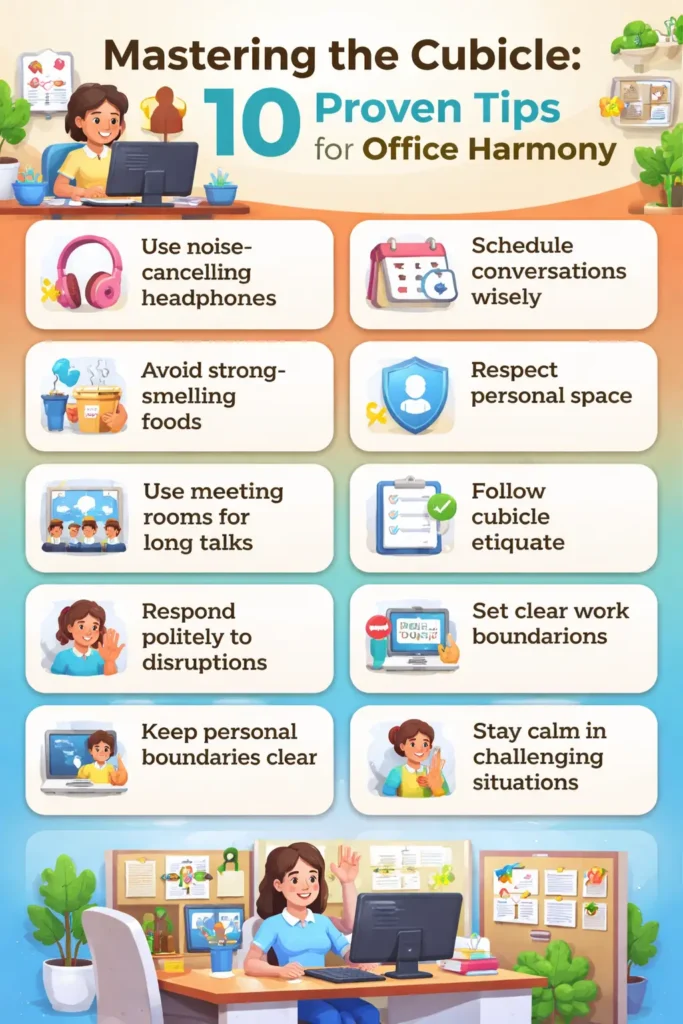
Here are 10 practical tips to create a peaceful and productive workspace:
- Use noise-cancelling headphones: Block out distracting sounds and focus better on your work throughout the day.
- Schedule conversations wisely: Plan non-essential chats at appropriate times to avoid constant interruptions during work hours.
- Avoid strong-smelling foods: Skip foods with strong odors like garlic or fish to keep the workspace pleasant for everyone.
- Respect personal space: Honor your colleagues’ physical and mental boundaries to build good relationships and avoid tension.
- Use meeting rooms for long talks: Have extended discussions in conference rooms instead of chatting at your office desk.
- Follow cubicle etiquette: Observe workplace norms and show consideration for shared spaces and shared responsibilities.
- Respond politely to disruptions: When facing minor annoyances, keep your responses brief, friendly, and professional.
- Set clear work boundaries: Define what is acceptable and what isn’t when it comes to work tasks and colleague expectations.
- Keep personal boundaries clear: Distinguish between professional and personal interactions to maintain respect and professionalism.
- Stay calm in challenging situations: Handle difficult moments with patience and logic to improve the overall work environment for everyone.
By following these simple but effective tips, you can transform a stressful workspace into a productive and enjoyable place where everyone thrives together.
You Might Also Enjoy: Which Home Office Furniture Sets Are Best for Productivity?
What to Do When Nothing Works
Sometimes, even after direct conversations and attempts to resolve issues, problematic colleague behavior may continue.
In such situations, bringing the issue to your manager with clear documentation becomes necessary and justified.
If the problem persists despite your manager’s involvement, contacting Human Resources is the appropriate next step to ensure proper action is taken.
Using professional and respectful language when reporting issues helps maintain dignity for all parties while reducing unnecessary tension.
For example, rather than accusing someone, you might say: “I’ve noticed that loud conversations during work hours are affecting the team’s focus. Could we find a solution that helps everyone work more comfortably?”
This approach frames the issue as a collective problem to solve rather than personal complaints, making it easier for management to take constructive action.
Remember, documenting incidents with dates, times, and specific details strengthens your case and shows you’ve taken responsible steps to resolve the matter.
Do it the right way: you protect yourself and help everyone work in a better environment.
Conclusion
Dealing with difficult coworkers in an office cubicle is a very common challenge that almost everyone faces at some point in their career.
The good news is that with professional behavior and the right strategies, you can manage these situations effectively—even in shared spaces filled with everyday essentials like an office chair, filing cabinet, or office table.
As you’ve read in “6 Annoying Office Cubicle Neighbors and How to Handle Them”, remember to stay calm when problems arise, set clear boundaries to protect your personal space, and keep a record of any concerning behaviors.
These actions will help you maintain your productivity and focus while creating a more peaceful work environment.
This guide protects your peace, keeps your focus on what matters, and helps create a more respectful space for everyone.
Please feel free to share this article with your colleagues, because when we all work together to maintain professional behavior, we create a better workplace for everyone.

John Ofield is the owner of Collaborative Office Interiors. Houston’s trusted source for modern and commercial office furniture, office cubicles, demountable walls, office desks and tables, and complete workspace solutions. With more than 40 years of experience, he combines deep product knowledge with hands-on space-planning expertise to create ergonomic, productivity-focused work environments for businesses across Southeast Texas.